Rural Dread
By Elizabeth Rush Brooks | Photography by Clay Dolan
Beneath our region’s quiet beauty, dark imaginations are at work—conjuring haunted houses, ancient evils and spooky stories that linger long after the lights go out.
There is something deliciously unsettling about the fact that Simcoe, Grey and Bruce—Ontario’s beautiful collection of quaint small towns, glittering waters and sun-dappled forests—has become home to an unlikely concentration of horror writers. Stayner, Collingwood, Wasaga Beach, Ravenna: these are places of tree-lined streets, familiar faces and the kind of welcoming quiet that usually signals comfort—not the lurking dread, supernatural menace or psychological terror that fills the pages of their residents’ novels. Yet behind brightly painted doors, in cheery home offices overlooking Nottawasaga Bay and at sunlit desks nestled in Beaver Valley, authors are dreaming up zombies, serial killers, ancient evils, paintings that come to life and the darkest corners of the human mind.
Acclaimed novelist and screenwriter Tony Burgess lives with his family—and exercises his creativity—in a haunted house in Stayner. Built in 1886 with a wake/viewing room and a cat cemetery out back, even the neighbours were afraid of it before Tony and his family moved in. Burgess doesn’t believe in ghosts himself, but he does have to tell them to shut up occasionally when the cacophony of noises interferes with his creative process.
Born in Mississauga and having spent summers on the Saugeen (Bruce) Peninsula, Burgess and his wife, Crown Attorney Rachel Jones, moved from Parkdale, Toronto, to Wasaga Beach in 1998 when she was looking for a small legal practice to join following her articling year. That first winter forced Burgess to “join everything in sight” just to get out of the house. He landed the lead in Oklahoma! at the local theatre and eventually performed in more than a dozen plays, an experience he considers a major influence on his writing and creativity.
Burgess loves rural settings because “everything touches everything. There is an entire universe in a small town.” It’s a philosophy that echoes Stephen King’s fascination with small-town life—but Burgess sees the horror itself differently. “Stephen King’s first order of business is the psychological horror, followed by peril and finally, as the situation degrades, the gross out. I flip it. The most valuable part of my stories is to gross people out. The least interesting to me is the psychological horror.”
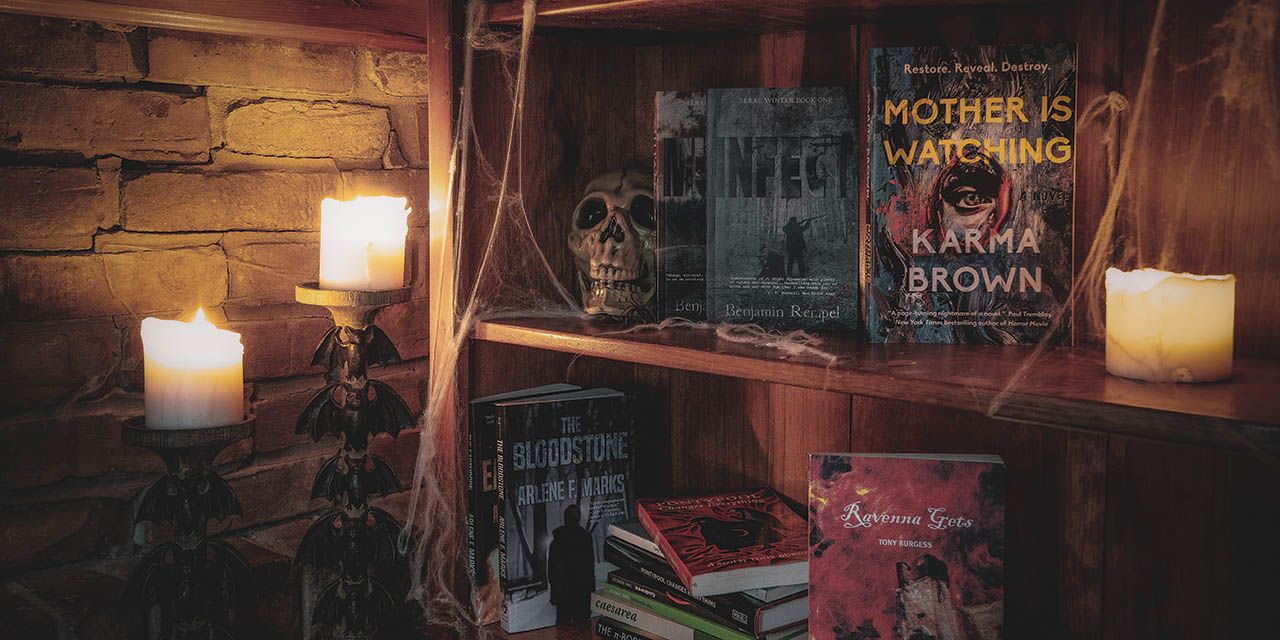
That distinction is evident in Burgess’s work, which pairs a masterful manipulation of language with an unerring ability to create compellingly fearful tales. His novels include The Hellmouths of Bewdley and Pontypool Changes Everything, the latter adapted into the acclaimed 2008 film Pontypool, directed by Bruce McDonald.
In the violent short-story collection Ravenna Gets, Burgess expands a passing vignette of an isolated, bleak Collingwood winter into interconnected tales of disgruntled Ravenna residents banding together to kill the citizens of Collingwood. Set a little farther south, the novella People Live Still in Cashtown Corners follows a fictional gas-station owner who undergoes a bloodthirsty personality change and embarks on a gruesome killing spree, complete with imaginary philosophical conversations with the corpses of his victims.
Burgess’s current work, chillingly titled Skin Elevator, is a stream-ofconsciousness tour de force not yet available in publication. It begins in the hot tub at the YMCA in Wasaga Beach but winds its way to a gruesome set of elevators filled with serial killers, gorecoated serrated blades, mangled corpses and ponds of exsanguination.
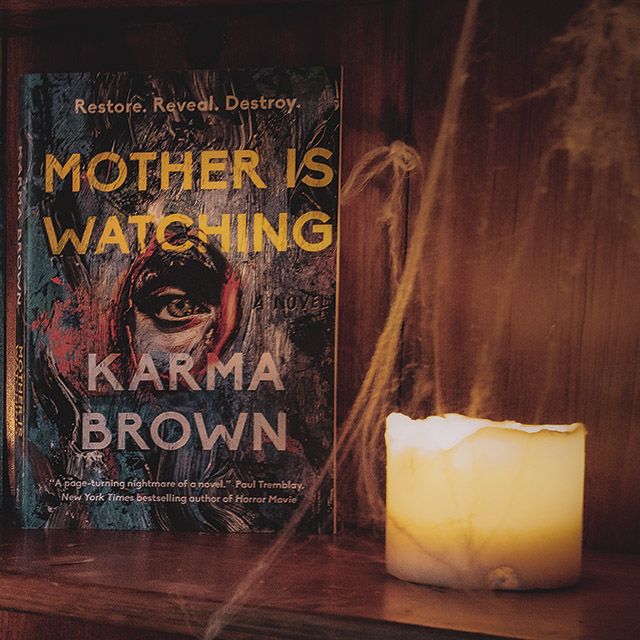
While Burgess goes for the visually appalling and nauseating, internationally bestselling author and journalist Karma Brown creates psychological and supernatural terror in her latest novel, Mother Is Watching. Brown grew up skiing at Blue Mountain. Her father, musician Bob Woodburn, lives in Collingwood, while Brown and her family have a vacation home and ski at Beaver Valley. Her time in the Valley gives her space to breathe and create. She feels happiest here—hiking, being quiet in nature and shopping for sourdough bread at the Kimberley General Store. The power of her connection to the Bruce is evident throughout her 2023 wilderness novel What Wild Women Do.
Brown describes Mother Is Watching as “speculative feminist fiction with a horror engine,” putting her firmly
among Escarpment authors who relish the fear they create in their readers. Set in the dystopic near future of Savannah, Georgia, where women are microchipped for their reproductive health and contributions to the population, wife, mother and art conservator Tilly Crewson is trying to raise her young daughter, become pregnant with her husband and restore the burned canvas of a long-lost painting.
Initially eerie and eventually sinister episodes encircle Tilly as more of the painting is revealed. Visitations from Tilly’s dead mother, macabre elements of the human body embedded in the painting and swarms of insects so terrifying it may be impossible to look at a simple moth the same way again escalate as Tilly gets closer to finishing the painting and her new baby grows in her womb. With an ending that evokes Rosemary’s Baby and “The Yellow Wallpaper”, Brown’s imagination— nurtured, in part, here in Grey-Bruce—is truly terrifying.
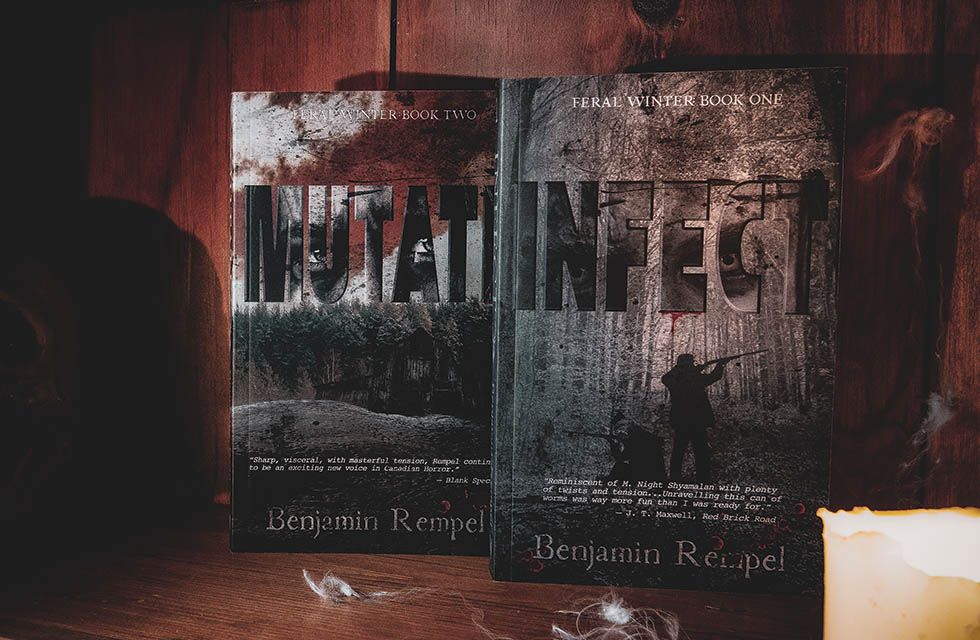
By day, Collingwood dad Benjamin Rempel is a project manager for a cancer research organization and a sports enthusiast by night. Yet in his spare time he conjures up infectious, brain-eating viruses that morph afflicted patients into grotesque mutants as they become flesh-hungry zombies.
Rempel grew up in the GTA and attended high school in Stouffville when it was still a small town surrounded by fields and farms. He takes the grimy, gritty, dangerous feel from those years and melds it with some of the starker views, smells and scenery of northern Simcoe County. The town of Barn Wood, in the first novel of his trilogy, Infect, is an amalgam of Collingwood, Stouffville and Thunder Bay.
Although he likes to exploit the myth that small towns do not have darkness, Rempel, like Burgess, is less interested in the psychological aspects of horror—he is more about the blood and gore. Exploring themes of big pharma, viral assault and survivalist skills, Andrew and his stepbrother Xavier try to defend themselves and what remains of their town from a virus that threatens to destroy everyone and everything. More gruesome assaults and bloodshed continue in the second book, Mutate, while readers will have to wait until 2027 for Antidote and the end of the trilogy.
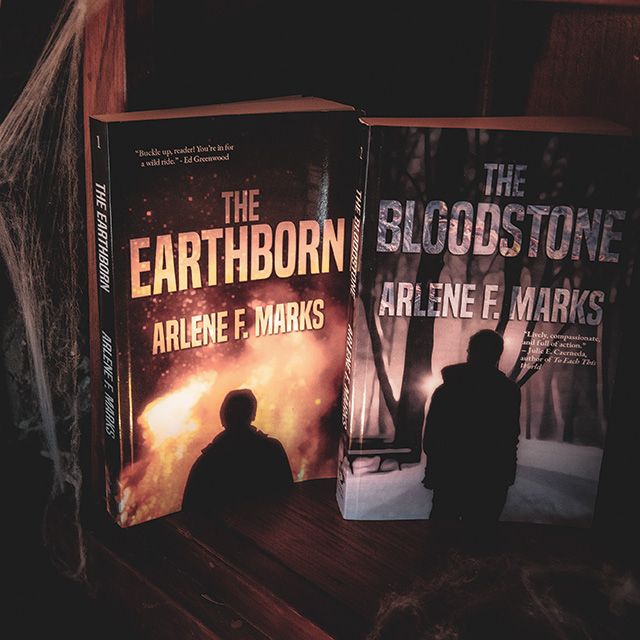
As a child, Arlene Marks did not have the playbook to the world that everyone else seemed to have. Her love of speculative fiction developed as she used reading and writing as an escape hatch from reality. Marks dislikes slasher movies and prefers her horror with a dash of humour, à la films like Tremors, the Scary Movie franchise and the television series Supernatural.
This is apparent in her alien-vampire Nash’terel book series. Amid shapeshifting aliens, Yeng assassins and brutally bloody murders, the true horror lies in how the Nash’terel become earthbound soul vampires in the first place. They are infected by a coral-like organism that gets into their bodies and changes them in seemingly positive ways—night vision, shapeshifting, lifespans of hundreds of years and nocturnal hunting—but also requires them to feed on the essence of humans or lose their own lives to the organism.
In one provocative twist on the genre, Marks’s protagonist Bilyash discovers that orgasms enhance the quality of life essence, so he gives something to his female victims while stealing their life force at the same time. Collingwood features in Bilyash’s flight from Toronto as he shops in every grocery store in town to buy enough raw meat to keep himself nourished while on the run with his human love interest, Angela. In the second novel in the series, nextgeneration Nash’terel Travis dreams of becoming an NHL star while playing U16 hockey for Collingwood’s fictional Georgian Bay Rockets.
Marks’s relationship with the area began long before it found its way into her fiction. In 1999, her husband rented a condo off Highway 26 between Craigleith and Collingwood for a twoweek family holiday. By the end of July, they had bought their own tiny cottage on Nottawasaga Bay after a neoncoloured “For Sale” sign seemed to call Marks’s name. What began as a plan to rent the cottage to skiers in winter quickly changed. As Marks puts it, they “ran away from home every weekend.” By 2012, they had renovated the cottage into a permanent home and moved to Simcoe County.
While their novels may leave readers looking over their shoulders for things that go bump in the night, these horror authors celebrate the beauty of the Escarpment and the creativity it helps feed. Marks shares her love of writing and monster creation through her creation of the literary festival CollingWord. This year, the third annual CollingWord will be held November 7–8 at the Collingwood Public Library, featuring a master class on world-building by Ed Greenwood, creator of Forgotten Realms, one of the most successful Dungeons & Dragons settings of all time.
Benjamin Rempel also helps organize CollingWord and works with Marks on the team that brings the “Word on the Bay” Writer’s Expo to the area. Both Rempel and Brown are grateful for the independent bookstore and library communities of the Escarpment and for the opportunity to meet readers and speak to genuinely engaged audiences. Brown, especially, praises how well independent bookstore owners and staff know her and her writing, and appreciates being included in thoughtfully curated theme nights and author panels.
In weaving local lore and dramatic landscapes into their fiction, these authors prove that some of the best horror stories start close to home. Sometimes the quietest streets, most inviting shores and most beautiful woodlands hide the darkest secrets. E
A DIFFERENT KIND OF DARKNESS
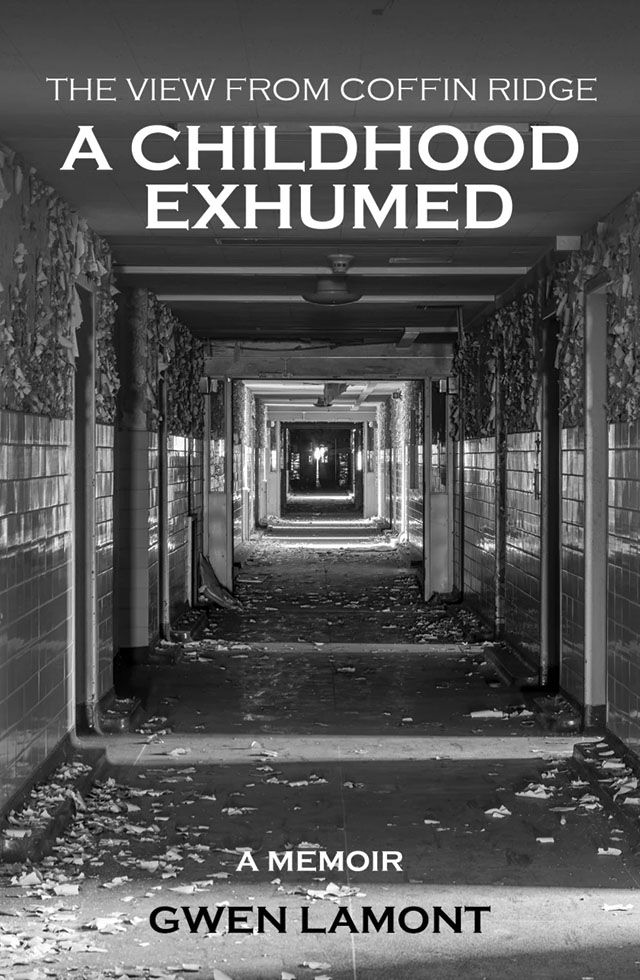
Not every dark story is fiction. In The View From Coffin Ridge: A Childhood Exhumed, Owen Sound author and Coffin Ridge Winery managing partner Gwen Lamont turns inward, confronting a childhood marked by violence, trauma and abuse— and the long process of recovery that followed.
Since its release, Lamont’s memoir has found an audience well beyond Grey-Bruce—and may now be headed for the screen. Toronto filmmaker Penny Eizenga first encountered the book before attending an October 2024 launch at Black Bellows Brewery in Collingwood. Struck by both Lamont’s story and its cinematic possibilities, Eizenga approached her that evening about adapting it. By December, Lamont had signed an agreement with Eizenga’s Dog Eared Productions to develop The View From Coffin Ridge as a feature-length film.
On Friday, October 30, Lamont and Eizenga will continue the conversation at the Marsh Street Centre in Clarksburg with An Author and a Filmmaker: Celebrating Women’s Stories. Beginning at 7 p.m., the evening will include readings from Lamont, a conversation between author and filmmaker and a screening of Eizenga’s short film Barefaced, starring Canadian actor Sheila McCarthy. The event follows the October 21 release of an enhanced second edition of The View From Coffin Ridge: A Childhood Exhumed.