The Art of Place
By Deena Dolan
At Nōma Gallery, a trio of artists explores the space between history, nature, and imagination.
Set just off Collingwood’s main street, Nōma Gallery has quickly established itself as a quiet force within the region’s cultural landscape. Carefully selected and constantly evolving, the gallery brings together a dynamic mix of established and emerging Canadian artists, spanning both contemporary and historical works. With a focus on storytelling, material, and place, each exhibition offers a distinct point of view—inviting viewers to slow down, look closely, and engage more deeply with the work. In this feature, we explore the practices of three artists whose approaches differ in form but share a common thread of exploration—of memory, landscape, and the spaces in between.
ABRAHAM ANGHIK RUBEN > MYTHS, STORIES, LEGENDS
“I have always tried to learn from others, either Inuit or other elderly people who can pass on their knowledge of what life is about. I try to put that into my sculpture.” Born in 1951 in a camp south of Paulatuk, Northwest Territories, Inuit master sculptor Abraham Anghik Ruben’s work is world-renowned. As a child, Abraham and his older brothers were taken from their parents and relocated to residential schools for eleven horrendous years. For Abraham, the pain has remained—haunting him throughout his life. Since then, Abraham’s lifelong quest has been focused on reconnecting with his people’s history, traditions, stories, and sadness. His powerful sculptures speak to cultures lost and times forgotten. Stories, myths, and legends of ancient Northern cultures find new life and expression through his work. Many of his sculptures centre on Abraham’s interest in the relationship between the Inuit and the Vikings, centuries before European explorers “discovered” North America. The list of Abraham Anghik Ruben’s honours and achievements is extensive and includes his appointment to the Order of Canada— one of the country’s highest civilian honours—for his artistic contributions as a sculptor and for his preservation of our northern heritage and national identity. “As a storyteller, I have sought to bring life to these ancient voices from a time when these two northern people held a reverence for the land and for all living things therein that provided sustenance and survival.” His works are found in private, public, and corporate collections and exhibitions throughout the world, including the Louvre in Paris and the Smithsonian National Museum of the American Indian in Washington, DC.
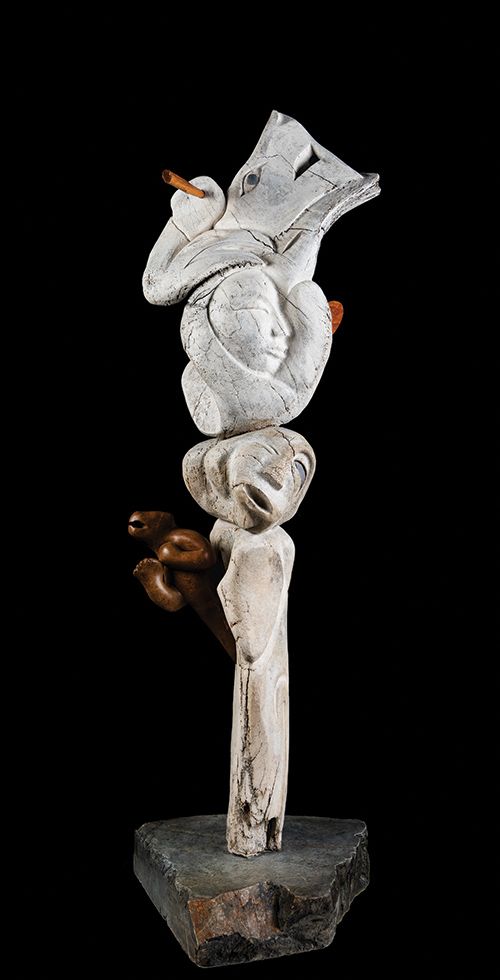
Echoes Of Spirits II, by Abraham Anghik Ruben. 800-year-old whalebone and Brazilian soapstone.
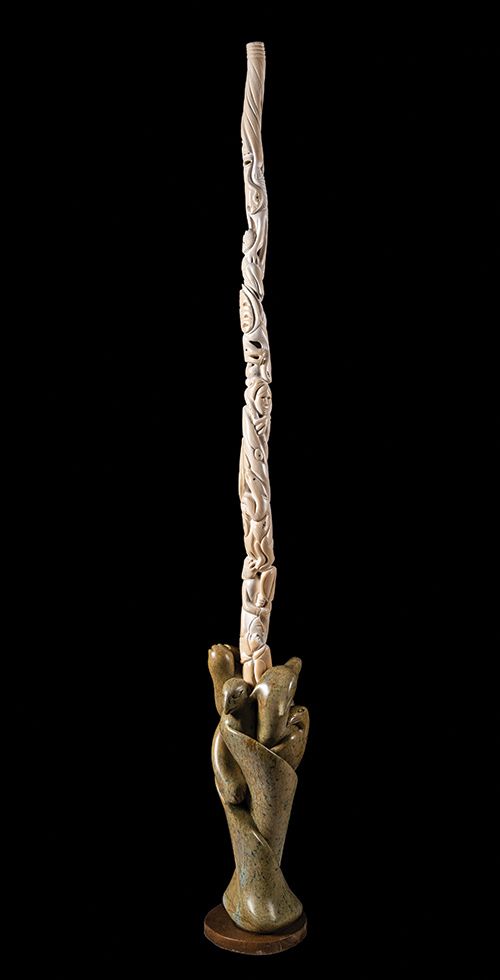
Song Of Inuvialuit, by Abraham Anghik Ruben. Narwhal tusk and Brazilian soapstone.
BLU SMITH > MODE RN ABSTRACTION INFUSED WITH ORGANIC FLAVOUR
Vivid, light-infused paintings are the hallmark of West Coast artist Blu Smith. Smith views his vibrant and powerful paintings not as individual pieces but rather as a collective of work. Early days found Blu practising his craft
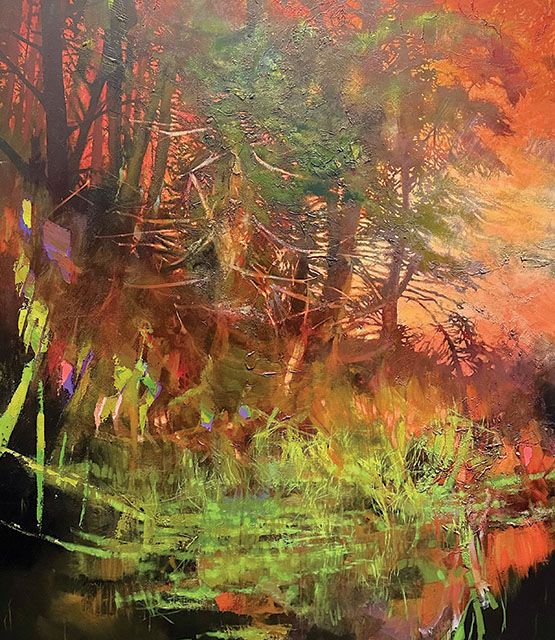
as a sign painter and commercial artist, where he honed his skills for accuracy and precision. But, as an exercise to free himself from the technical restraints of realism, he developed his mature style as an abstract artist—drawn by its uninhibited freedom. It was an act of liberation, a chance to break free of the realistic confines. Non-representational abstraction became a creatively freeing direction that evolved into his distinctive artistic voice. “I look at my paintings not as individual pieces but rather as a living, breathing, and constantly evolving body of work. It really does take on a life of its own.” Blu’s works pulse with electric, everchanging energy. His subject matter is based on organic shapes with strong ties to nature and is balanced with cavernous spaces filled with atmospheric light. Using a combination of brushwork, palette knife, and heavy texture, complemented by thin layers of transparent glazes, Smith is less concerned with detail than with the pursuit of the canvas working overall. “The viewer,” he says, “needs to use some imagination to fill in the gaps.” His landscapes seem infused with psychedelic mastery. Typically, he begins with broad washes and textures, then pulls out and develops threedimensional shapes within the structures, finally resolving the surface with incisive drawing. The results are glowing, organic abstractions. Living on Canada’s West Coast, Smith draws inspiration from natural shapes, light-filled spaces, and mesmerizing landscapes that are deeply rooted in the natural world that surrounds him.
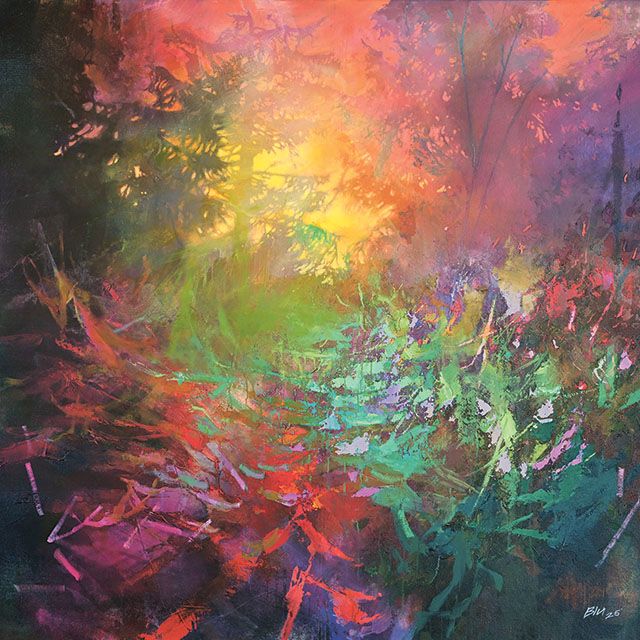
Left: Missing Place, by Blu Smith. Oil on canvas, 60″ x 60″.
Right: Fractured Landscape, by Blu Smith. Oil on canvas, 60″ x 72″.
WENDY BIRMINGHAM > TEXTURE, MOVEMENT AND COLOUR
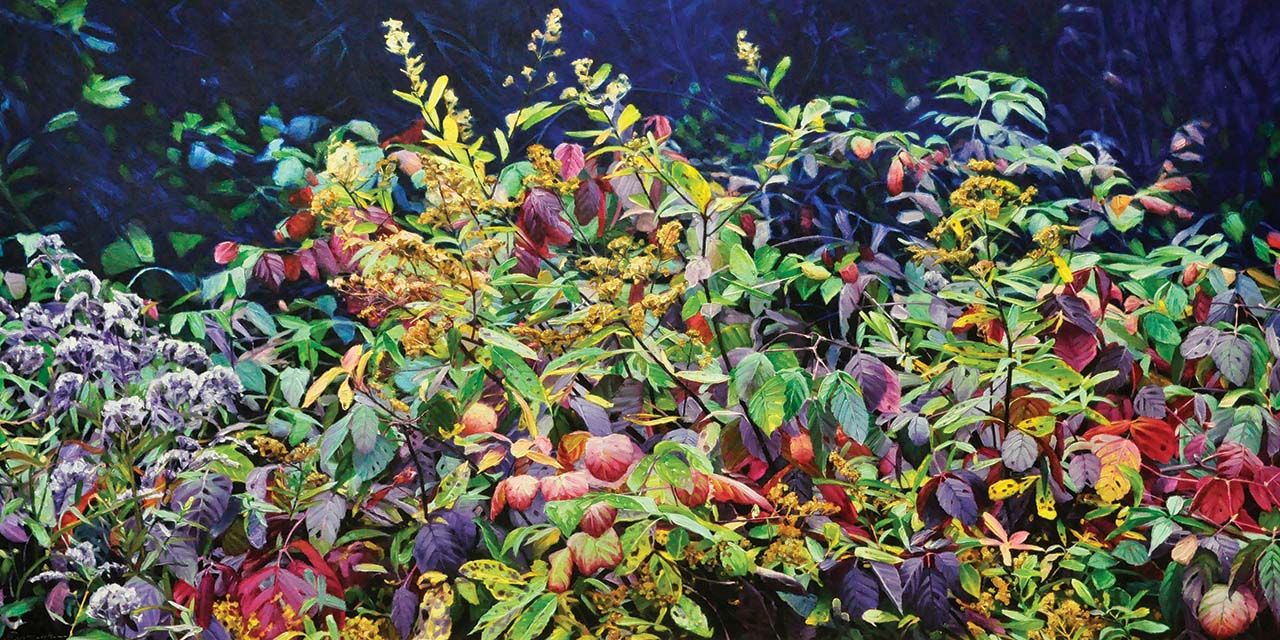
While navigating wild gardens found on the outskirts and open areas around forests Wendy Birmingham often must weave her way through tangled and prickly vegetation in order to get the scene she knows is just right for one of her paintings. As a kid, Wendy Birmingham always loved small inner worlds—in the grass or under leaves—where there was a tiny, secret world busily going about its business. “I’m not surprised my heart would eventually lead me to this secret world of tangled flora that no one would even look at twice.” Graduating from the Ontario College of Art and Design in 1985, Wendy worked as a freelance assembly artist but later developed a successful career as a graphic artist. Discovering that fine art was her true calling, Wendy began painting in earnest for herself. Primarily self-taught, her early paintings were large still-life pieces inspired by Georgia O’Keeffe. “I’ve always painted in oils, and I only paint on cradled wood panels. I like how the paint lays down on it, and it’s very durable.” Over the years, landscapes became her focus as she developed her signature style using expressive brushwork and palette knife textures. “I used paint to describe my subject.” Turning her focus to the forest floor, scattered with myriad abstract shapes of leaves, rocks, and plants, her paintings evolved with fewer trees and more flora in the foreground. “In art, I think it’s important to listen to the heart and follow where it takes you.” To that end, Greenwood Conservation Area, near Ajax, has been her muse for the past seven years. “Now my paintings have no trees, or once in a while a small forest in the far background, and instead consist almost entirely of a chaotic weave of leaves, vines, branches, and wildflowers.” E
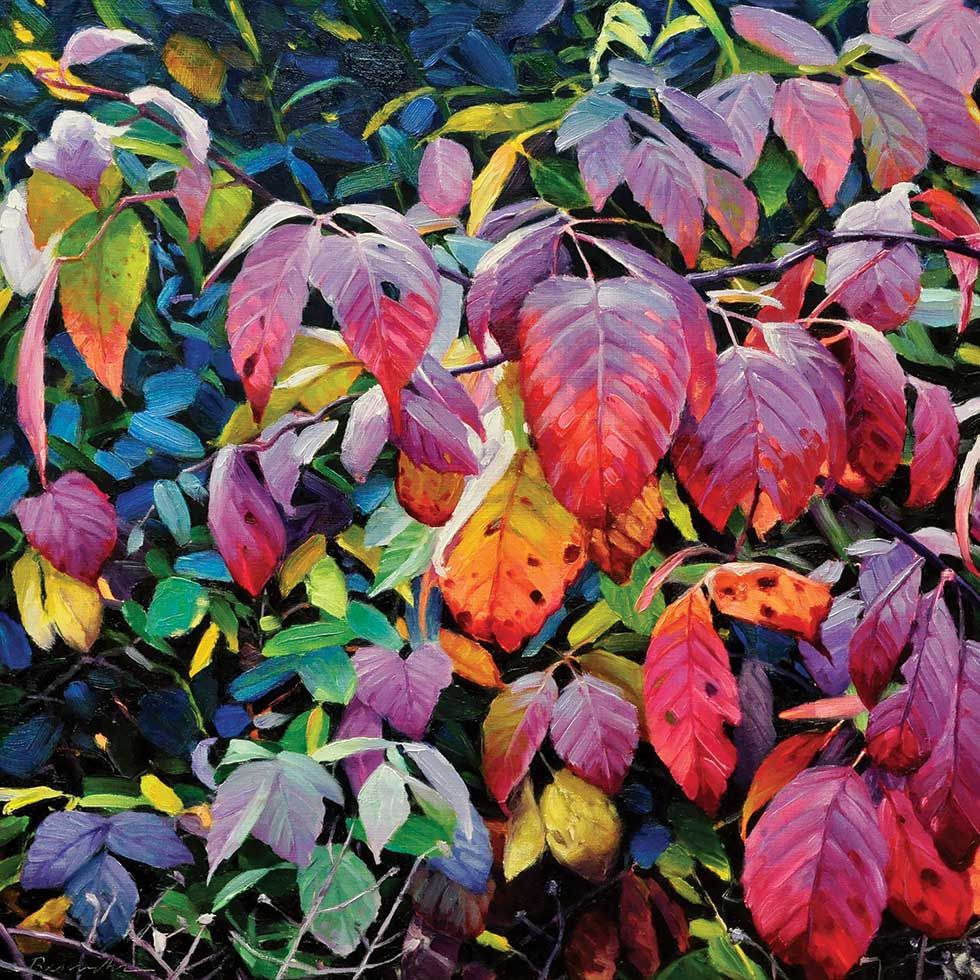
Bejeweled, by Wendy Birmingham. Oil on cradled wood panel. 12″ x 12″.
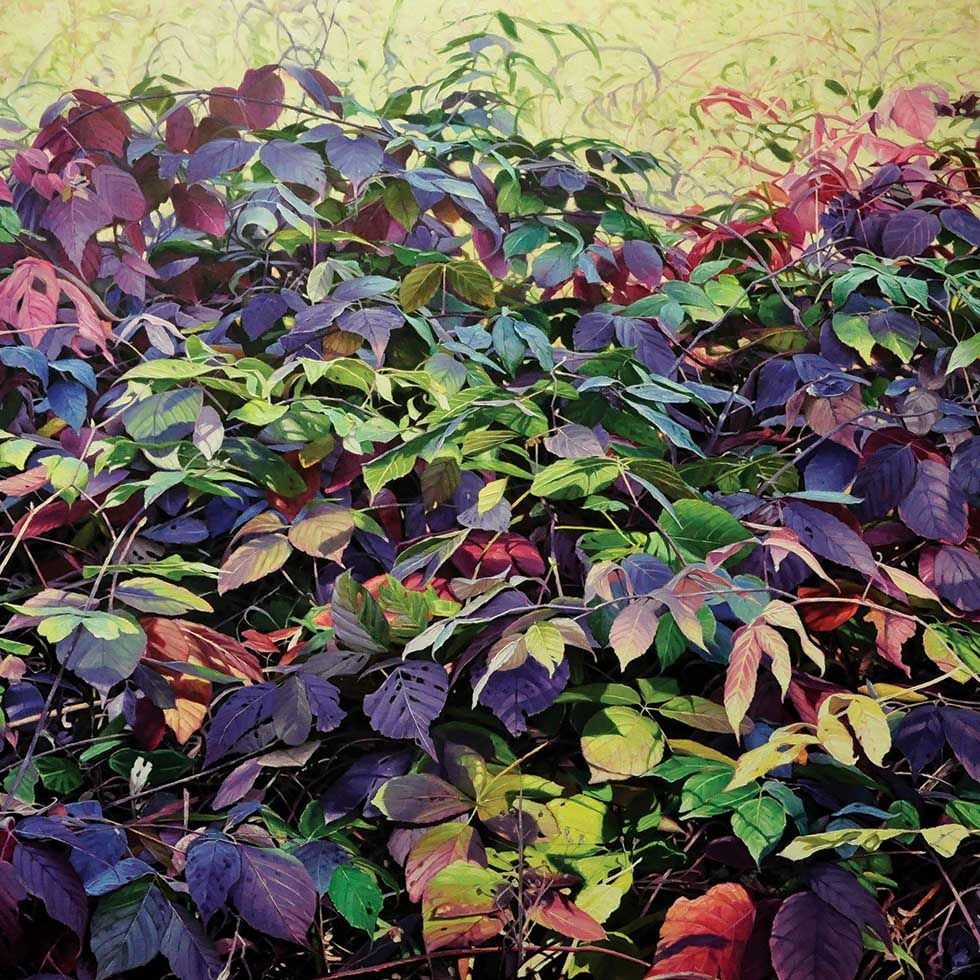
Voluminous, by Wendy Birmingham. Oil on cradled wood panel, 48″ x 48″.
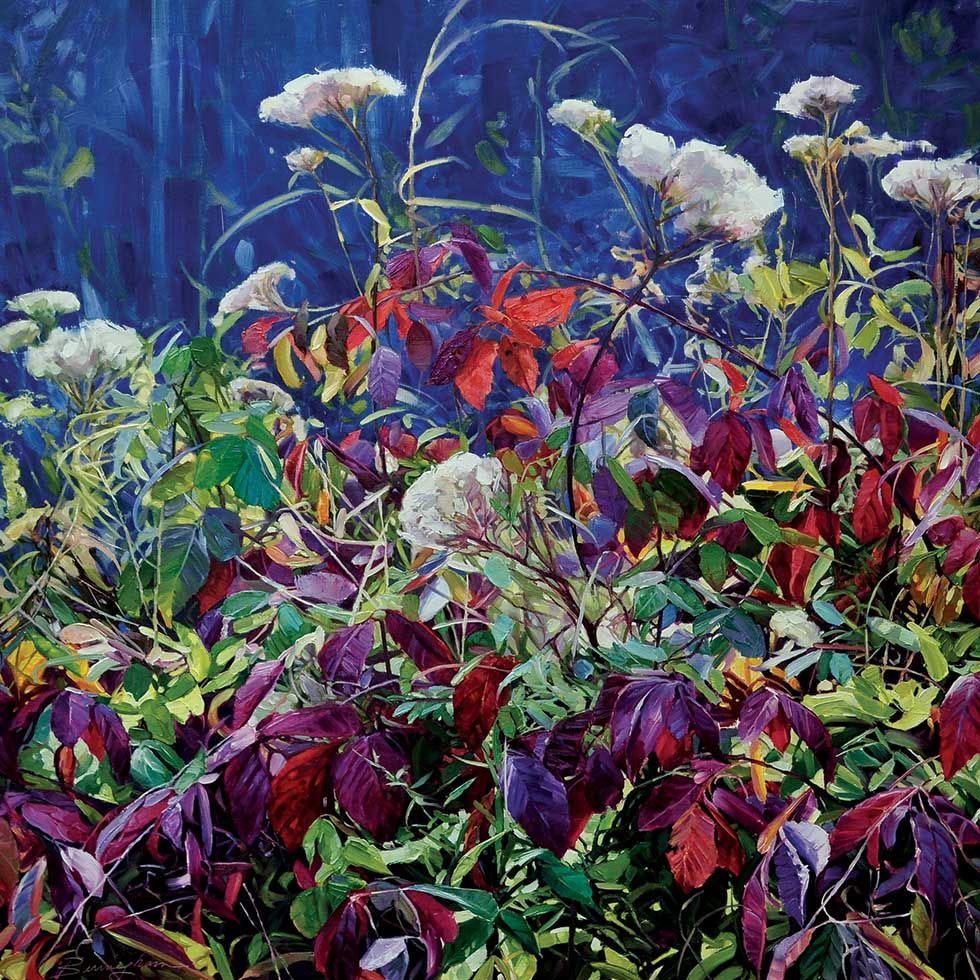
Big Sugar, by Wendy Birmingham. Oil on cradled wood panel, 30″ x 30″.
Visit Nōma Gallery at 25 Huron St., Collingwood.
nomagallery.ca