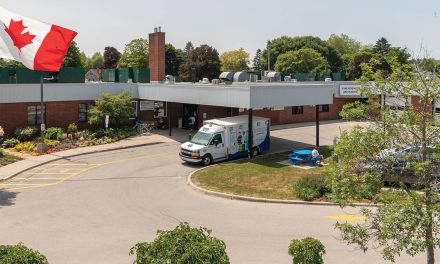
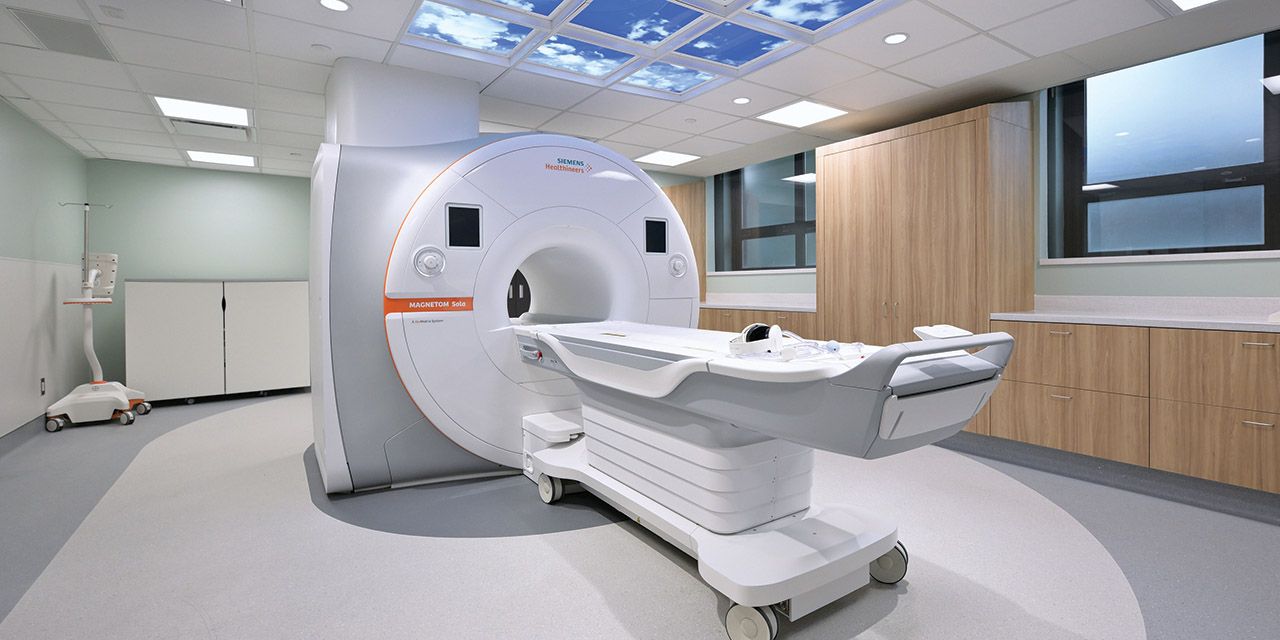
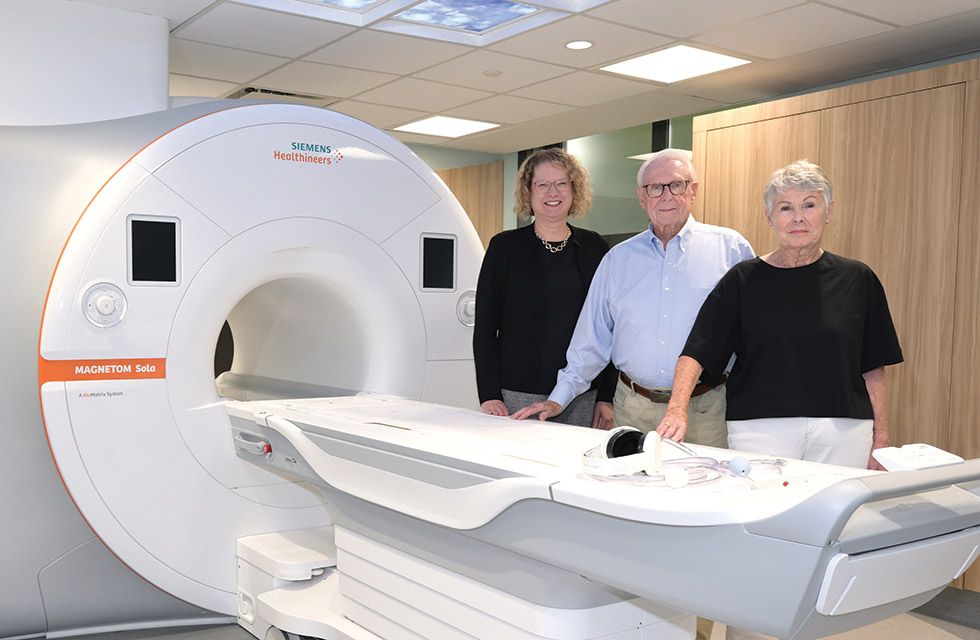
The arrival of CGMH’s first MRI machine marked a major milestone in expanding diagnostic imaging. Photo: Michael Gray.
Precision, Vision, and the Future of Care
By Heather Fields
How Diagnostic Imaging and the Vision for Tomorrow’s Hospital Are Transforming Healthcare in South Georgian Bay.
On any given day at Collingwood General and Marine Hospital (CGMH), a quiet but powerful transformation is underway.
In the Diagnostic Imaging department, a highly coordinated team moves seamlessly between patients, technology, and complex clinical questions, producing the images that guide diagnoses, shape treatment plans, and save lives closer to home.
“It’s the intersection of people, machines, and technology that makes it work,” says Jamey Gilroy, Manager, Diagnostic Imaging and Echocardiography at CGMH. “It all has to come together seamlessly and when it does, it’s pretty remarkable.”
Through a combination of community investment, clinical leadership, and long-term planning, CGMH has significantly expanded its diagnostic capabilities, anchored by three key technologies: MRI, mammography, and SPECT-CT.
Together, they represent more than new equipment. They signal a shift in how care is delivered, experienced, and imagined for the future.
MRI: A “Game-Changer” for Local Care
For decades, MRI scans were something local patients had to leave town to access, often travelling long distances and waiting months for appointments.
That changed with the arrival of CGMH’s first MRI machine in the fall of 2025.
“It’s a game-changer,” Jamey says. “We’re not shipping patients out, waiting for them to come back, and then waiting for reports. We can answer those clinical questions right here.”
In its first six months, the MRI program completed more than 2,200 scans which is an immediate indication of the need and the impact.
Unlike CT imaging, which captures broader anatomical structures, MRI excels at detail, especially in soft tissues like the brain, spine, joints, and internal organs.
“MRI is really about precision,” Jamey explains. “It gives you those fine details that can be pivotal for diagnosis and treatment planning.”
But what patients may not see is the complexity behind that precision. The MRI program took four years to bring to life and required everything from Ontario Provincial Government funding approvals and equipment procurement to construction, staff training, system integration, and even emergency response protocols.
“The MRI is a massive magnet that’s always on,” Jamey says. “We had to design the space for safety, train staff and first responders, and build the entire clinical program around it.” The result is not just faster access, but a fundamental shift in how care is delivered locally.
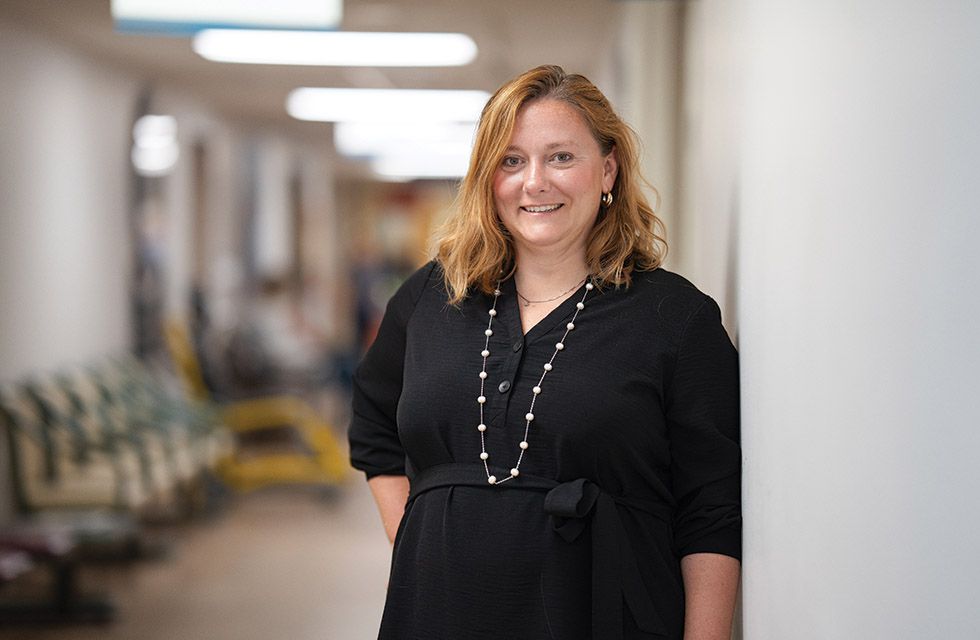
Jamey Gilroy, Manager, Diagnostic Imaging and Echocardiography at CGMH. Photo: Barry Adunmo.
Mammography: Expanding Access, Diagnosing Cancer Earlier
While MRI represents a major milestone, CGMH’s mammography program tells a story of steady, intentional growth that has been driven by rising demand and a deep commitment to early detection.
Since joining the Ontario Breast Screening Program (OBSP) in 2017, the hospital has increased its screening volumes from approximately 3,200 exams annually to more than 5,600 and demand continues to grow, particularly following updated guidelines that lowered the self-referral screening age from 50 to 40.
In response, the CGMH Foundation dedicated the 2024 Tree of Life annual campaign to raising the funds for two new mammography units. Thanks to a generous gift from the late Teri Yamada and her husband, Doug Moxon, every dollar was matched up to $375,000 to help purchase the new machines which will double the capacity and introduce advanced capabilities that go beyond traditional screening.
These include:
• 3D-guided (stereotactic) biopsies, allowing clinicians to target abnormalities with greater accuracy
• Contrast-enhanced mammography, which highlights potential cancers by injecting Iodine which highlights areas that may be cancers within breast tissue (beginning in fall 2026)
These advancements are especially valuable for detecting cancers that may be obscured by dense breast tissue and not visible with ultrasound.
At the heart of this work is a simple but powerful goal: detect early stage breast cancer, potentially allowing earlier less invasive surgery and improved treatment options.
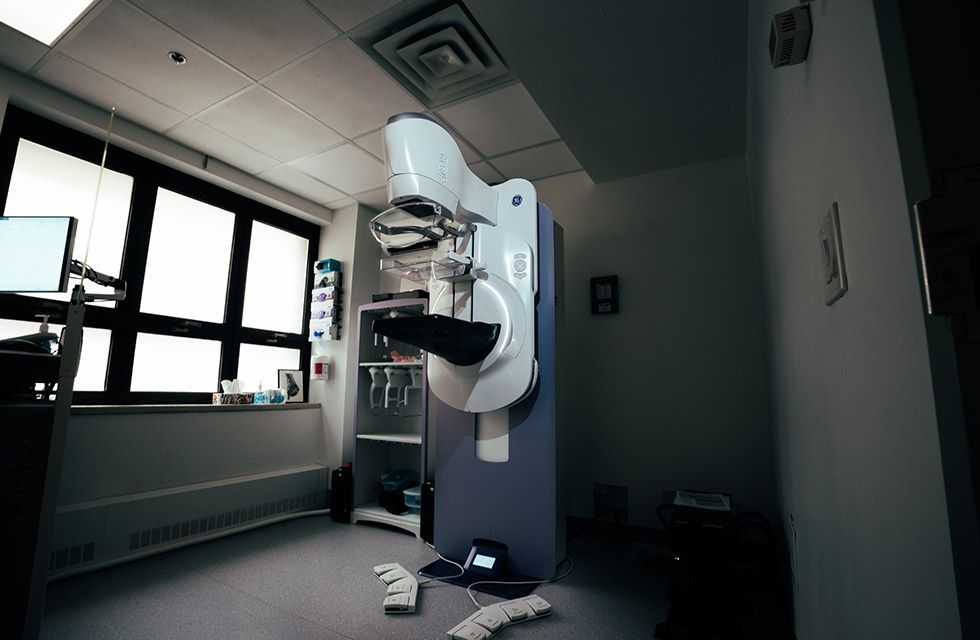
The new mammography machine will expand screening capacity and cancer detection. Photos: Michael Gray and Barry Adunmo.
SPECT-CT: Structure and Function
While MRI and mammography focus on structural imaging, SPECT-CT introduces another dimension entirely: function.
This hybrid technology combines nuclear medicine, where a
small radioactive tracer is used to observe how the body is working,
with CT imaging, which provides detailed anatomical structure.
“It is fusion,” Jamey says. “You’re bringing those two technologies together to create a much more precise picture.”
The result is a powerful diagnostic tool that can:
• detect the spread of cancer to bones
• identify infection or inflammation
• assess heart function
• pinpoint abnormalities with greater accuracy
“With SPECT-CT, we now have a backup CT scanner,” Jamey explains. “So if our main CT goes down, we can still care for emergency and inpatient cases.”
Installing the system, however, was far from simple. After early plans stalled during the pandemic, the project required a complete redesign, including relocating the system to a new space to support its weight, safety requirements, and patient flow.
Building for Today and for Tomorrow’s Hospital
These investments are not happening in isolation. They are part of a deliberate strategy to prepare for Tomorrow’s Hospital, South Georgian Bay’s new state-of-the-art facility.
Inside Tomorrow’s Hospital, diagnostic imaging will be expanded and designed from the ground up to improve patient flow, clinical integration, and capacity.
Sandra Taylor, President & CEO of the CGMH Foundation, with donors Wayne and Maureen Pitman.
The planning includes:
• placing related services together (like fracture clinic and X-ray)
• faster access to imaging from the emergency department and intensive care unit
• space to grow as new technologies emerge
The new hospital provides a clean slate to optimally design the structure and flow of the new Diagnostic Imaging Department.
Importantly, the technology being installed today at CGMH is part of that bridge, building programs, training staff, and scaling capacity ahead of the transition.
The Human Side of Innovation
Despite the focus on advanced equipment, what matters most are the people.
From technologists carefully calibrating each scan, to radiologists reviewing thousands of images, to booking teams coordinating care, every test represents a deeply coordinated effort.
“You might not realize how much goes into one exam,” Jamey says. “Now multiply that by 70,000 each year.” Behind every image is a patient often arriving with uncertainty, fear, or vulnerability.
Accelerating Forward
With new technologies coming online, volumes growing, and Tomorrow’s Hospital on the horizon, the pace is increasing rapidly.
For patients in South Georgian Bay, that acceleration means something tangible: faster answers, more advanced care, and the ability to stay close to home when it matters most.
For CGMH it reflects something bigger, as the team is not just keeping up with change, but actively shaping what comes next.
To find out more visit TomorrowsHospital.com and join the momentum to build the hospital that South Georgian Bay needs and deserves. E