The Collective Shift
By Cara Williams | Photography by Jody Wilson
The Collingwood Collective brings young riders together building skills, confidence, community and stewardship on local trails.
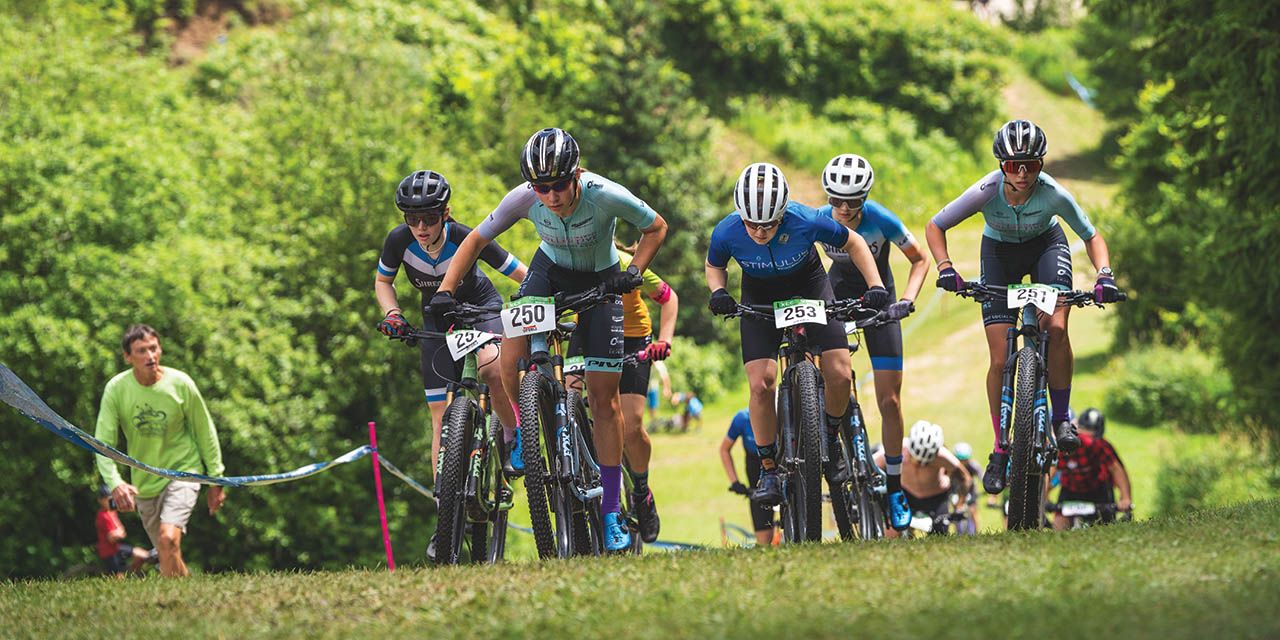
A LINE OF YOUNG RIDERS moves through the trees, tires tracking over packed dirt as the trail bends and disappears ahead. From a distance, it looks quiet, steady, almost instinctive—but up close, there’s laughing and chatter, the occasional call back down the line, the sound of brakes catching and releasing as riders settle into their rhythm. Some are still finding their footing, braking early into corners, while others carry speed and loop back, offering a line to follow. It’s fluid, a little unpredictable and constantly in motion—the group getting better each time they ride together.
This is where the Collingwood Collective begins—not with a rigid program or a set of expectations, but with kids on bikes. Having fun. The idea behind it is simple: give young riders access—to trails, to guidance and to each other—and something special starts to take hold. Skills develop, of course, but so does confidence. Riders begin to trust their instincts, to carry speed where they once hesitated, to find flow in sections that felt unpredictable just days before.
At Collingwood Collective, the structure is there—groups organized by ability, sessions that build on one another—but it never overshadows the sense of play and fun that keeps kids coming back.
This accessibility is intentional. As a non-profit initiative, the Collective is designed to open the door to as many young riders as possible, keeping programming affordable while connecting families to the cycling community—local clubs, trail systems and opportunities to stay involved beyond a single season.
Just as important is what happens beyond skill development. As riders become familiar with the trail network, they begin to notice the ground beneath them—the sections that shift with weather, the areas that need care. The trails stop being simply a place to ride and start to feel like something worth looking after.
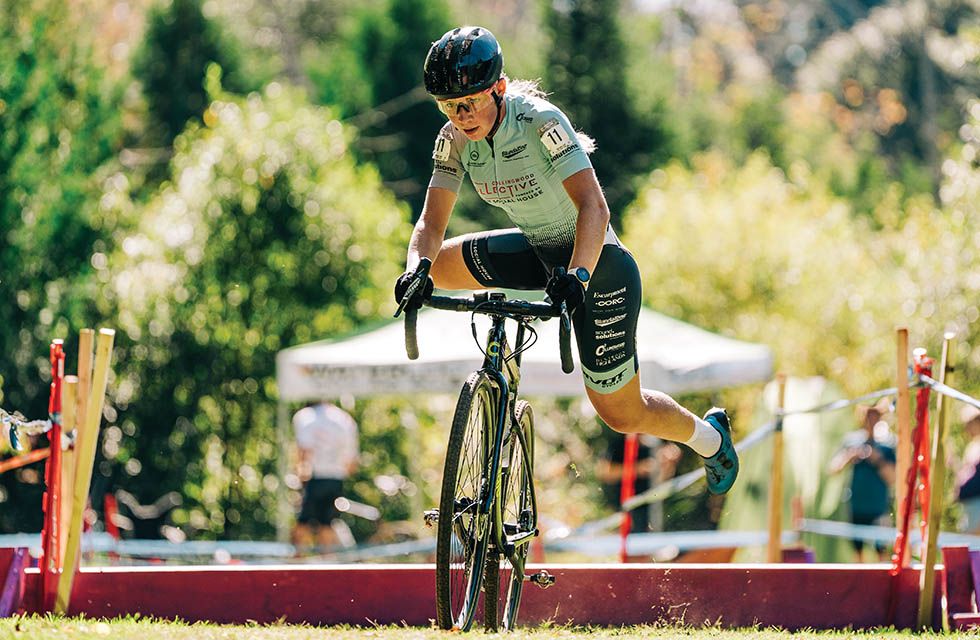
Elly Moore hops back on her bike, at Highlands Nordic.
That awareness is built into the program. The Collective places equal value on riding and stewardship, encouraging respect for local green spaces and natural corridors that extends well beyond the trails themselves. Over time, riders aren’t just using these spaces, they understand why they matter to the community.
It doesn’t take long for that to extend outward. Parents linger at the trailhead, siblings arrive with their own bikes, and what begins as a weekly commitment starts to shape how families spend their time. Local trails become part of the routine, and the experience stretches well beyond the program itself.
That sense of belonging carries off the trails as well. Spaces like Summit Social House have become natural gathering points, a placeto reconnect after rides, share stories and continue the conversation. It’s a different kind of motion—less about pace, more about relationships—but just as important to the culture taking shape.
For some riders, that’s where it stays. They ride, they improve and become lifelong cyclists with a strong riding network. For others, the focus shifts. The Collective’s race team offers a more structured path, supporting performance-driven athletes with coaching, training and opportunities to compete at a national level.
What stands out is that most riders don’t leave this environment behind. They stay connected to the same trails and the same community, bringing that experience back with them. Over time, that starts to show up in small, meaningful ways—mentoring younger riders, helping with programming or simply setting the tone on a group ride. It isn’t formal, but it creates a natural sense of responsibility that keeps the program grounded as it grows.
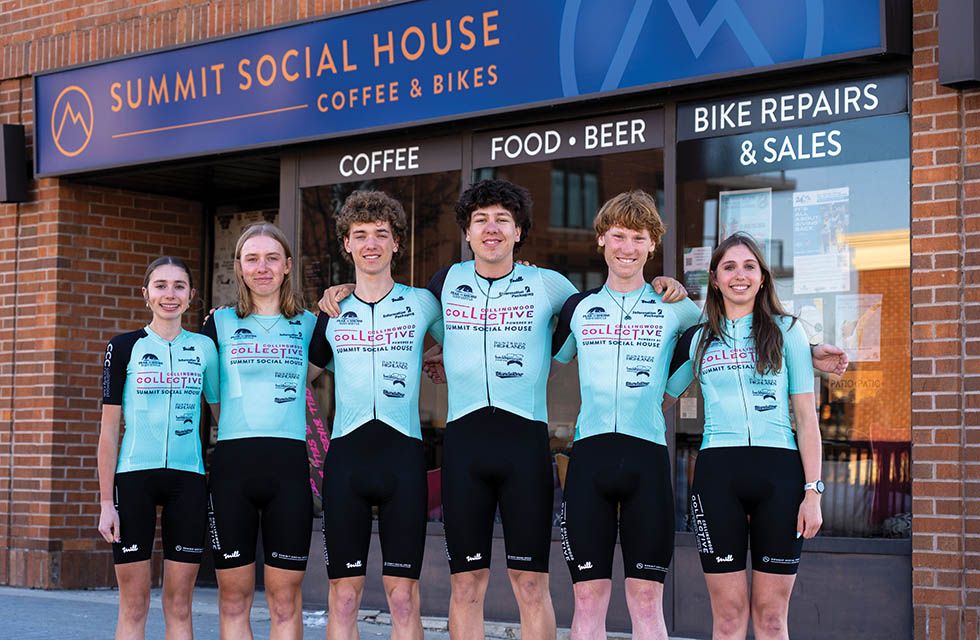
Hannah Lehmann, Elly Moore, Evan Moore, Farland Lamont, Liam McFarlane and Julia Lehmann at Summit Social House in Collingwood.
The results are becoming easier to see, with riders earning podium finishes, team selections and opportunities to compete at higher levels. Those milestones matter, but they’re only part of the story. Just as important are the returning riders, the steady participation and the feeling that this is something people want to stay part of.
The next phase of the Collective is already taking shape, with expanded programming, a summer camp component and stronger connections to local schools—all aimed at bringing more young riders into the sport and keeping them engaged.
Of course, growth comes with its challenges. More riders mean more pressure on time, resources and the trails themselves, but the approach hasn’t changed: keep it accessible, keep it local and keep it connected.
Here on the Escarpment, that mindset feels like a natural fit. Outdoor recreation is part of daily life, and the Collective builds on that rather than trying to redefine it. It offers structure without rigidity and ambition without exclusivity, giving riders space to find their own way within it.
Back on the trail, the group is moving again as the light filters through the trees and the pace settles into something steady. Stronger riders pull ahead, then circle back, folding into the group once more. No one is really left behind, and the ride continues as it started—together, moving forward.
This is the Collingwood Collective in its simplest form: a place to start, a place to progress, a place to take care of. E
For more information on Collingwood Collective, youth programming, summer camps, and Summit Social House, visit collingwoodcollective.ca