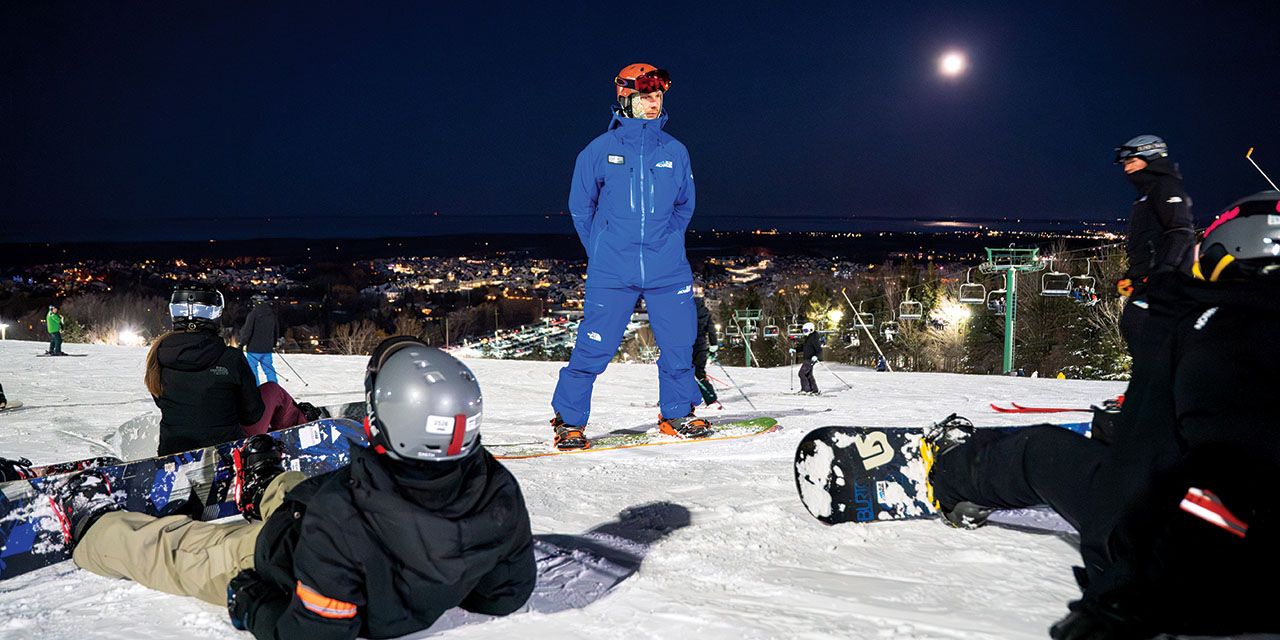
Blue Mountain’s beginner programs are designed to take new skiers and snowboarders from the learning area to the top of the mountain with confidence.
Learning Curve
By Cara Williams
Photography courtesy of Blue Mountain Resort, the Canadian Ski Council and Second Tracks
From first turns to finding your place on the mountain, a new wave of programs is opening the door to skiing and snowboarding.
There is no elegant way to try skiing or snowboarding for the first time. Boots turn walking into a full-body negotiation, gloves vanish the moment you set them down, and simply carrying your equipment across a parking lot can feel like a sport. Everyone looks a little ridiculous, but it’s a rite of passage—and at a resort the size of Blue Mountain, the questions begin before you’ve even found a place to park. Which end of the resort do you start at? Do you need to own equipment? What exactly is included in a beginner package? And how many lessons does it take before you can ride a chairlift and ski or ride from the top?
“A ski resort can be an overwhelming place for someone who has never participated,” says Erin Traynor, Blue Mountain Resort’s Director of Recreation and Programming. “We want to break down the walls and the intimidation and make it easy, accessible and enjoyable.” That thinking is behind Blue’s Learn to Ski Guarantee, a guided, three-step progression created for people who have never skied or ridden—or who are still firmly planted in beginner territory. The name may say “ski,” but snowboarders are very much invited to the party. The goal is straightforward: in three consecutive lessons, participants gain skills, build confidence and learn to safely ski or snowboard from the top of the mountain to the bottom—guaranteed.
Step One is a 45-minute lesson covering the essentials: getting comfortable with the equipment, balancing, gliding and, most importantly, stopping. A beginner lift ticket is included, and rental equipment can be bundled in, so there is no need to invest in gear before discovering whether sliding on snow is actually your thing. Participants can also repeat the introductory lesson throughout their first day until they feel ready to move forward.
Step Two takes place on a return visit and includes a three-hour group lesson, with skiers and riders linking turns, exploring beginner terrain and building the skills needed to use a chairlift.
Step Three is a 90-minute private lesson. The goal is to ride the chairlift to the top and put everything together on the way back down: slowing, stopping, turning and navigating a route to the base.
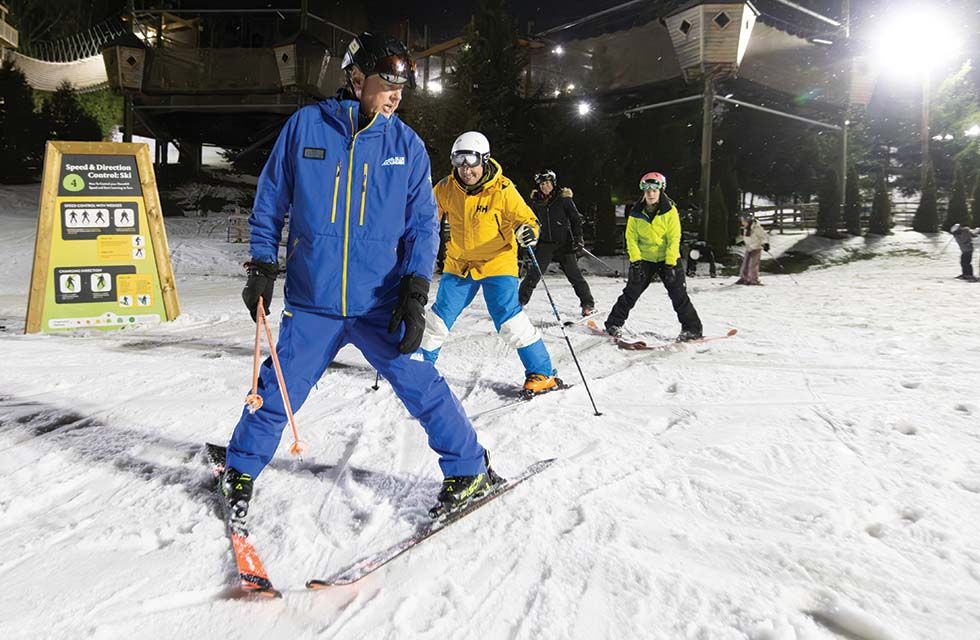
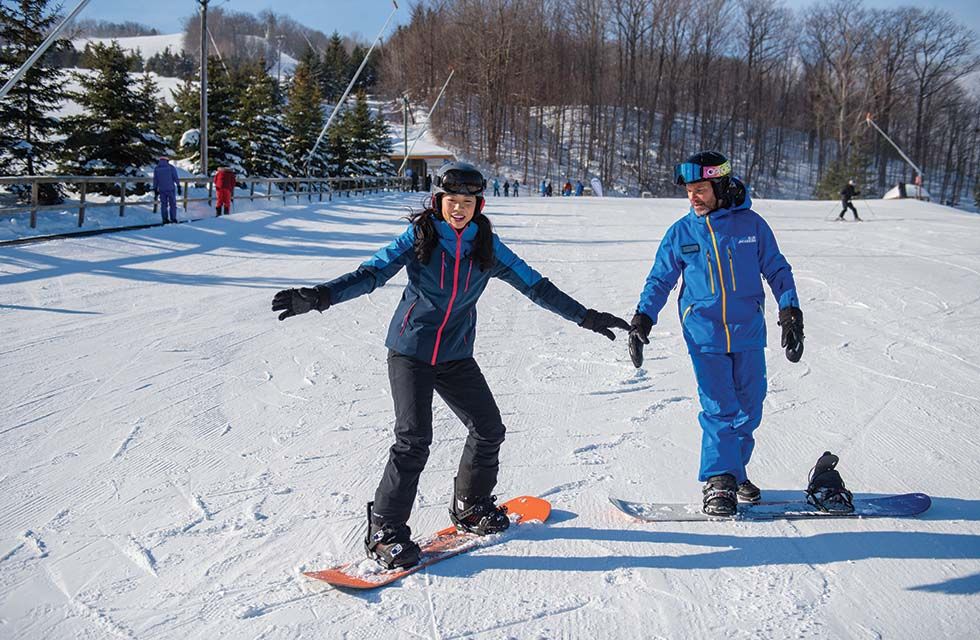
Beginner lessons at Blue Mountain focus on building confidence, linking turns and progressing safely toward the chairlift.
And yes, the “guarantee” is meant seriously. If a participant has not developed the necessary skills after the third step, the program’s current terms provide another comparable lesson. Graduates also receive a free 5×7® Pass, giving them the chance to keep practising for the rest of the winter.
At Blue’s Snow School, finishing comes with a little ceremony. Graduates ring a large bell at the bottom of the beginner terrain while instructors and other guests cheer them on. For a moment, finishing a green run feels every bit as exciting as standing on an Olympic podium.
Erin recalls one family visiting from Mexico who completed the program over four days. By the end of their stay, every member of the family had progressed through the steps and earned 5×7® Passes. The real prize wasn’t simply reaching the top once; it was leaving with the skills—and the opportunity—to return.
Blue is also preparing to introduce a version of the three-step progression for children as young as four, allowing parents and children to learn during the same stage of life—even if they are not necessarily in the same lesson. “We recognize that skiing is a family sport,” Erin says. “This is a great opportunity for kids to learn at the same time as their parents, and for parents to learn at the same time as their children.”
The people who want to try skiing are out there. The challenge is getting them from curious to committed. That is where the Canadian Ski Council (CSC) is concentrating much of its attention. After studying the beginner market, President and CEO Paul Pinchbeck says the Council identified a group roughly the same size as Canada’s current active skiing and snowboarding population: about 2.6 million Canadians who have not yet participated, but are both interested in snow sports and aware of them. The CSC calls them the “interested and aware.”
For Paul, that distinction matters. The industry does not necessarily have to convince these people that skiing exists—or even that it looks fun. It has to give them enough confidence to actually try it. “We don’t seem to suffer from an awareness problem in snow sports,” he says. Instead, CSC research points to confidence as a major barrier: uncertainty about cost, equipment, instruction, whether people like them will be there and, very simply, whether they will look foolish.
The Council is therefore shifting some of its attention earlier in the process. Rather than focusing only on people already prepared to book a beginner day, it wants to reach the curious sooner, using information and content to make the sport feel relatable before asking them to commit.
The message is changing too. Less cliff-dropping and extremesports imagery; more of what a winter on snow can actually give you—time outdoors, shared adventures, family memories and people to share them with. Nordic skiing is part of that conversation too, both for its own appeal and as a gateway into other snow sports.
CSC’s successful Never Ever Days will remain an important low-cost way to sample skiing and snowboarding, but Paul sees Blue’s new progression as an example of where beginner programming can go next: away from a one-and-done lesson and toward what he calls a “multi-step, multi-touch opportunity to enter snow sports at your own pace.”
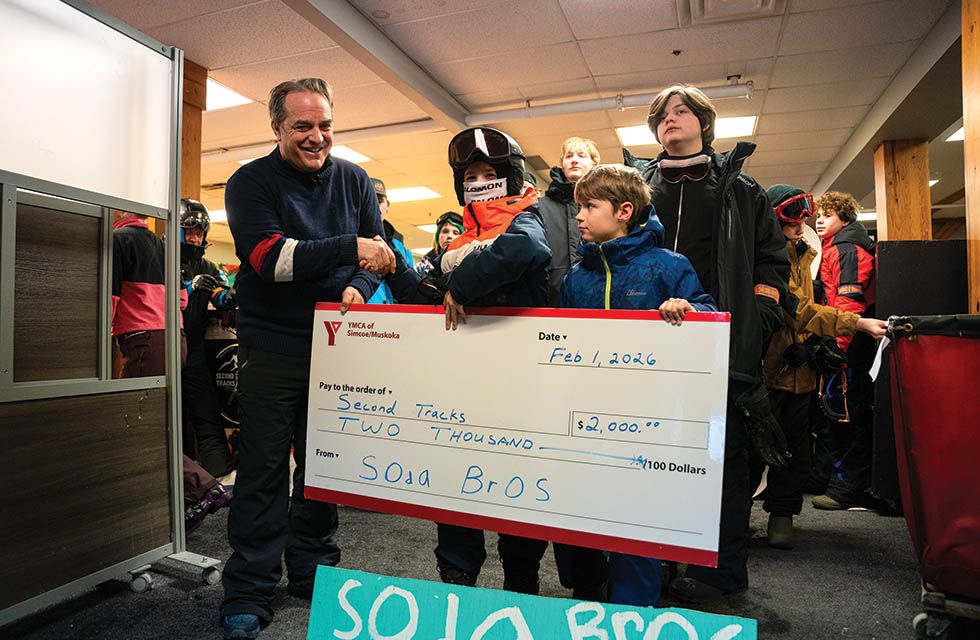
For some families, though, getting onto the hill remains out of reach. And the barriers aren’t always financial. Second Tracks, developed through a partnership involving the YMCA of Simcoe/ Muskoka, North Shore Ltd. and Blue Mountain Resort, is entering its third year of giving local youth ages 12 to 16 the opportunity to learn to ski or snowboard at no cost. Entry is not contingent on proof of financial hardship; the program is open to local young people who have simply never had the opportunity to participate.
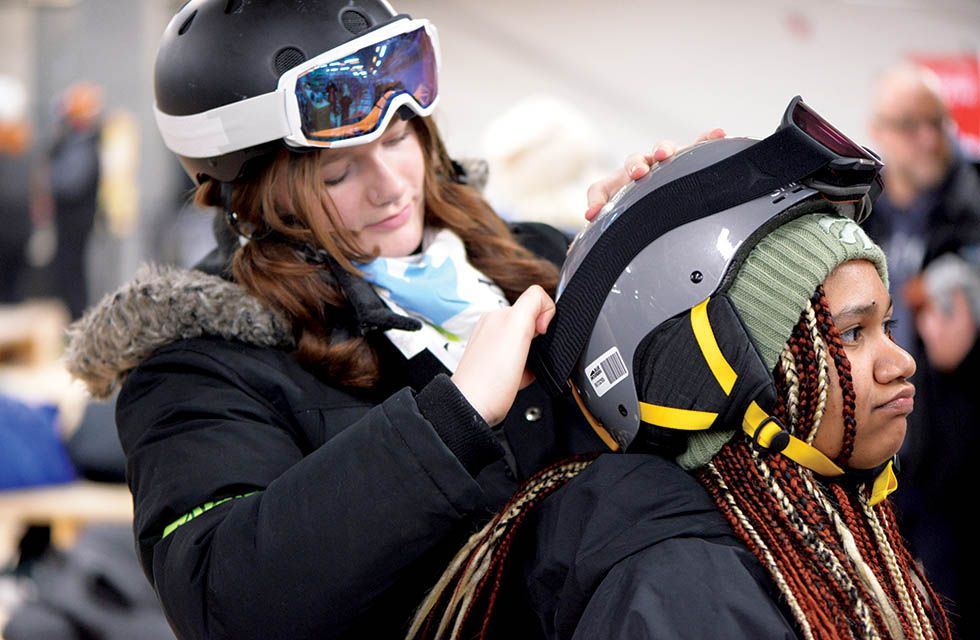
Blue provides facilities, rentals and lift access, while Snow School instructors volunteer their time. Transportation from the Collingwood YMCA and a meal are also included, removing some of the practical hurdles that can make getting to the hill nearly as difficult as learning once you’re there.
Second Tracks founder John Mealey says the program continues to evolve as organizers learn more about the kids who take part. Many arrive nervous, having spent years seeing Blue Mountain lit up from a distance without ever imagining themselves on it. Then the progression begins: boots, slipping and sliding, the carpet, the chairlift and, finally, the top.
“They did the work, took a risk, fell down and got back up again all on their own steam,” John says. For the volunteers, he says, that moment at the summit is often when they can see a young person begin to view what’s possible a little differently. And the experience doesn’t necessarily end with those first evenings on snow. Last season, Second Tracks entered a team in the 24h Blue MTN, giving kids who had only recently learned to ski the chance to take part in one of the mountain’s signature events.
This year, the pathway extends even further. After a trial run last season, Second Tracks is expanding bursary funding for participants who want to continue skiing and pursue Canadian Ski Instructors’ Alliance (CSIA) certification. The organization will fully fund a Level One CSIA program at Blue Mountain—a commitment worth approximately $3,000, including an eightweek training program and a full pass.
It is a remarkable progression: first turns, then more time on snow, then perhaps a job teaching someone else to make theirs. John hopes the model can eventually expand regionally and beyond. For him, the opportunity isn’t simply about learning to ski; it’s about opening the door to everything that can come with it. That may be the thread connecting all of these efforts. Reaching the summit is a memorable milestone, but the larger goal is to create people who look forward to winter, feel at home on the hill and return year after year.
“We want them to experience it and come back,” Erin says. “Ultimately, we hope we create lifelong skiers who feel part of our community.”
Your first day may still include an uncooperative boot, a clumsy tumble and a moment when the chairlift appears to be moving much faster than anyone promised. That is all part of it. Start in the learning area. Rent the equipment. Take the lesson. Ask every question—even the one that seems obvious. Before long, the top of the mountain may not feel intimidating at all. It may simply feel like the beginning. E