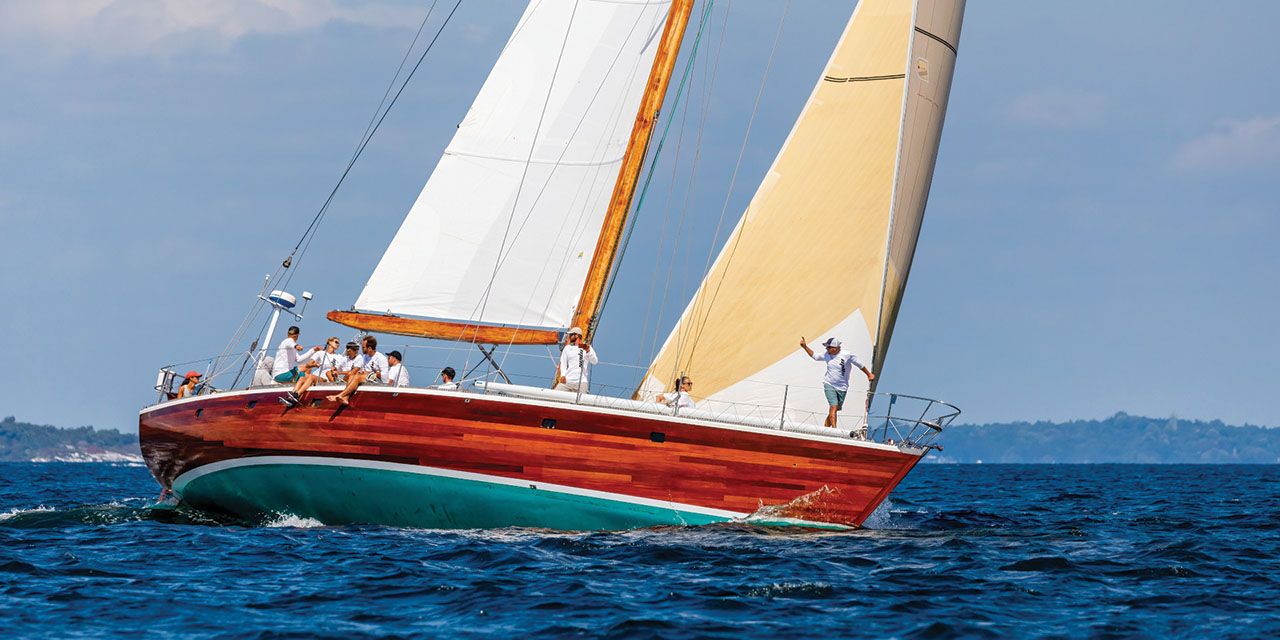
Vic Carpenter’s Passing Wind
Liquid Assets
By Kate MacLennan
For three decades Georgian Bay boat builders made yachts that were esteemed and copied around the globe. Almost overnight those businesses disappeared, leaving a legacy of world-class sailboats in their wake.
Mere decades ago, on the shores of southern Georgian Bay, a tightly interconnected community of people quietly influenced a global industry. This crew of innovators strove tirelessly to stretch the laws of physics, push the boundaries of material science and hydrodynamic theory, and capture the power, strength, and beauty of nature in the design and function of yachts. Thousands of yachts. Yachts built so well that when you see sailboats on Georgian Bay today, about 70% of them were made right here between 1960 and 1990.
To be considered a yacht, a recreational vessel needs to be longer than 32 feet, but those 20 feet plus are categorized as mini yachts. “The word ‘yacht’ is unfortunate as it often implies rich guys cruising around in Saint-Tropez,” says Dave Harris, principal at Harris & Ellis Yachts. “The people who were building yachts in southern Ontario were engineers, architects, and craftsmen and women who loved to sail and rose to the challenge of making great boats.”
Boat building dates back millennia, but for the purposes of this story we’ll start the clock in 1958, the year the supersonic interceptor aircraft Avro Arrow was designed and built in Malton, Ontario. Around the same time, modest boat yards began to pop up across southern Ontario in converted barns, garages, and basements. The Arrow made big waves in the news, though only five were ever built before it was cancelled in 1959. Meantime, the feats of engineering that happened in those boat yards sailed silently under the press’ radar.
“The pocket of boat-building talent here included the who’s who of yacht builders and was very well known—outside of Canada,” emphasizes Harris. Among the trailblazers were the prolific duo George Cuthbertson and George Cassian (an aircraft engineer; he’d worked at Avro on the Arrow project). In 1961 the pair, both sailors, formed Cuthbertson and Cassian Design Group, which in 1969 became C&C Yachts in Niagara-on-the-Lake.
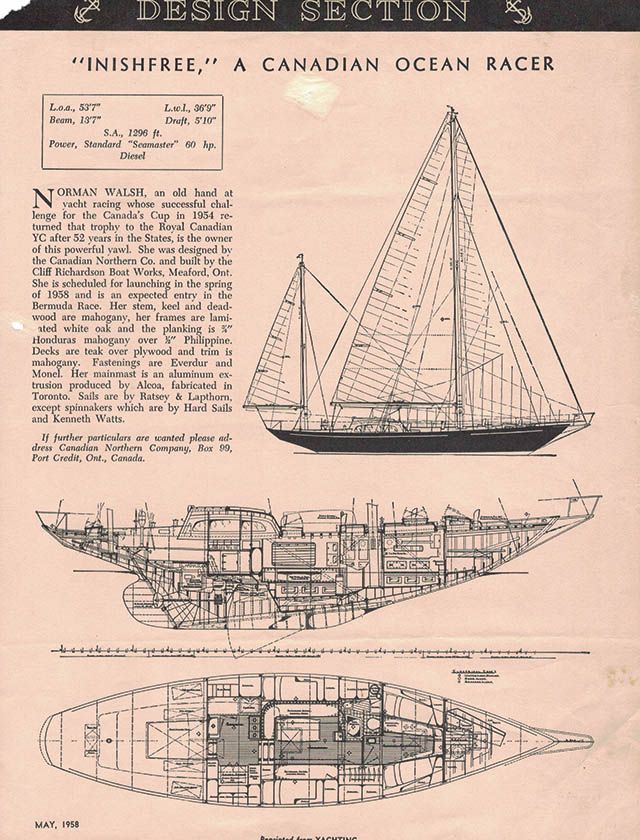
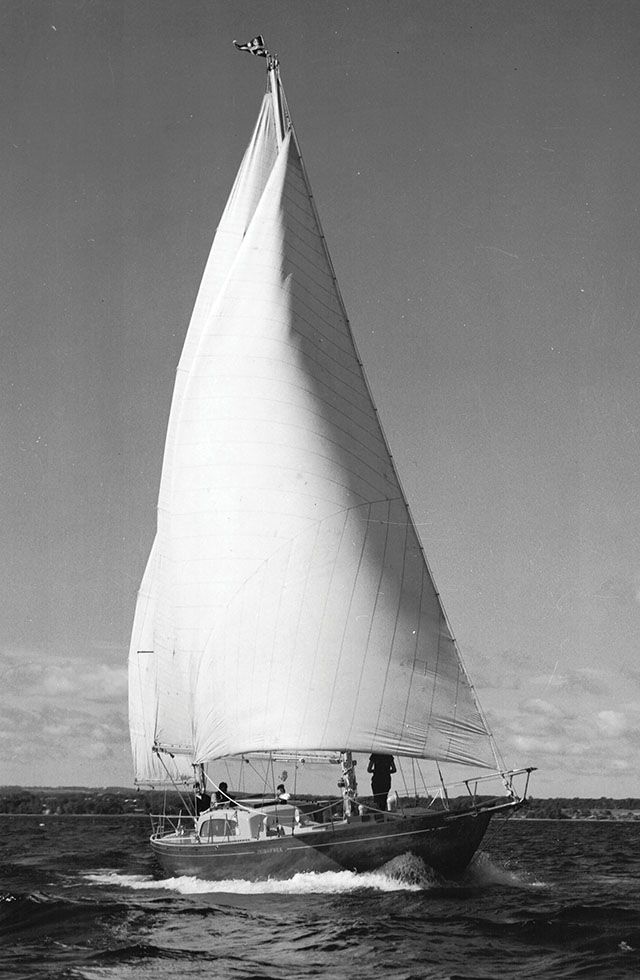
Above: A brochure for Cliff Richardson’s Innishfree design. Photo courtesy of Cliff Richardson Boats. Right: Cliff Richardson Boats Innishfree sailing off Meaford.
C&C was as much a design-build-and-supply shop as a talent incubator. Its associates included George Hinterhoeller, who was known for building the fibreglass race-cruiser Invader 36 (in 1965) and whose techniques with fibreglass were broadly adopted by the industry, as well as Erich Bruckmann, who builtthe 40-foot racing yacht Red Jacket (in 1966). Red Jacket’s fibreglass construction was touted as revolutionary, and it became the first Canadian boat to win yachting’s prestigious Southern Ocean Racing Circuit (SORC)—and did so handily.
The talent who crossed professional paths with the C&C contingent built businesses around Lake Ontario, Lake Huron, and beyond. Others specifically chose southern Georgian Bay to set up shop. Among them were wooden boat builders Victor and Hazel Carpenter. The couple had fallen in love with sailing on Georgian Bay and, in 1964, relocated from Michigan to Port McNicoll, where they established Superior Sailboats.
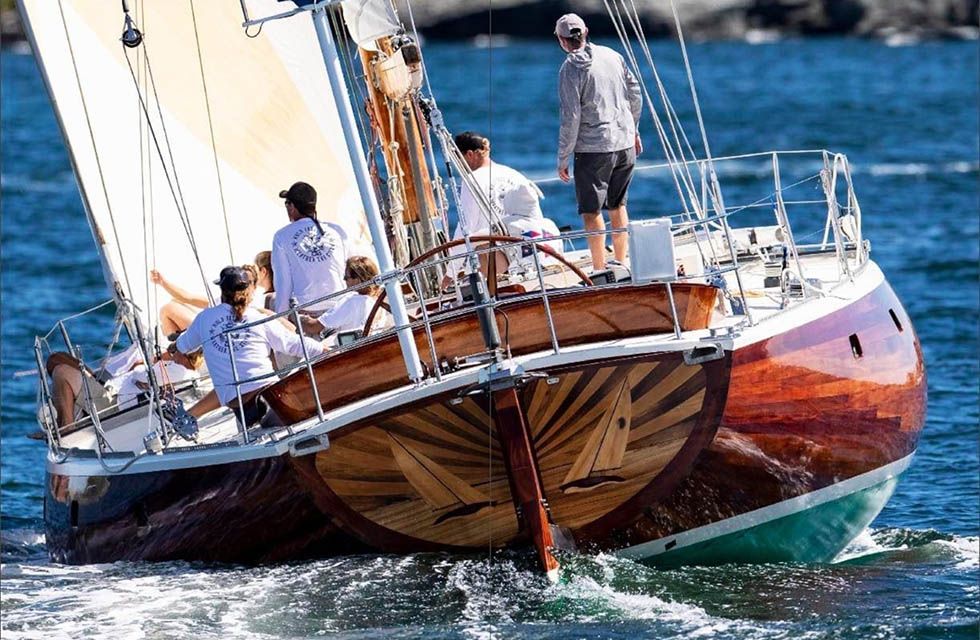
Vic, as he went by, was on the cutting edge of design and building. His boats were known for not leaking (surprisingly uncommon for wooden boats), and he’s generally credited with bringing epoxy adhesives from the auto industry over to the boat industry (though it was an American company who took that technology to the bank). Vic often embraced a popular racing design of the time called the tumblehome and favoured bows that were quite plumb and wider sterns that were sculpted to accommodate artistic woodwork on the transom.
“Those boats are really something. Very fast and beautiful,” says Paul Weitendorf, a long-time member of the Georgian Yacht Club in Owen Sound and the organizer of its current Wednesday night race. “Back in the 1970s a regional sailboat race was run out of Owen Sound, and there’d be several Carpenter boats taking part. When they’d go out to the start line and the gun would go, those boats would be gone, right out over the horizon. They were ahead of their time.”
Ewan Campbell, a yacht broker for Maple Leaf Yacht Sales, says, “At that time New England had no shortage of renowned wooden boat builders, but that end of the market was well-heeled and had a great appreciation for those kinds of boats. So, it didn’t take long for a few of Vic’s boats to make their way down there. His name definitely got around.”
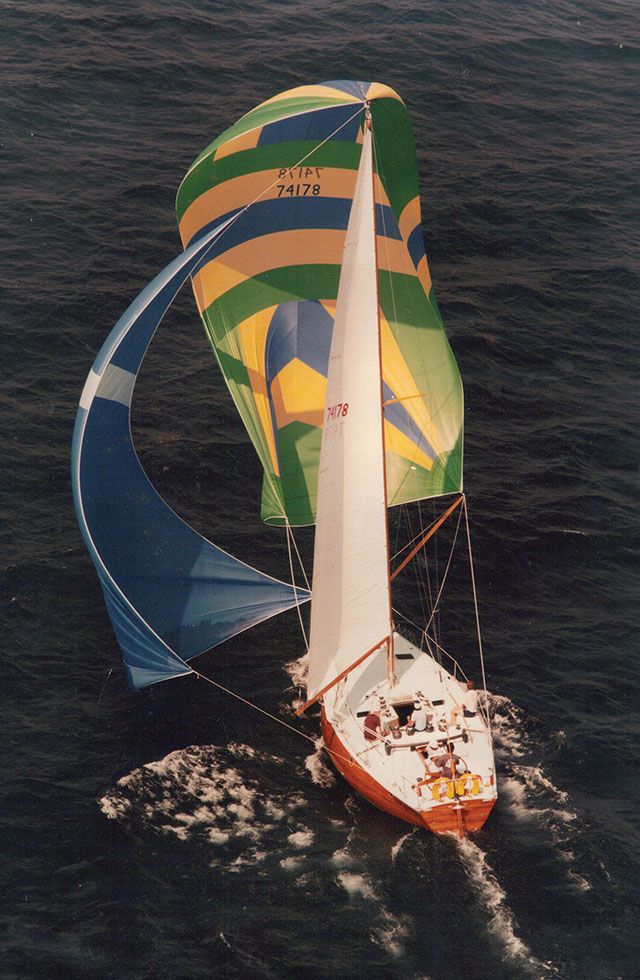
Vic Carpenter’s Passing Wind (left) and Coffee Grinder under spinnaker (right).
Superior Sailboats were known for custom crafts that often took two or more years to build. One such commission came from Canadian troubadour Gordon Lightfoot, for whom the Carpenters built the 45-foot sloop Golden Goose. The duo’s masterpiece, however, was arguably Passing Wind, a 62-foot cruiser. The U.S. magazine Artful Living described it: “The one-piece solid slab doors of Honduran mahogany and beautiful inlay work on the counters, tables, and transom are worthy of any art gallery. The boat is built entirely of wood, with one-inch-thick decking constructed from three layers of laminated red cedar and mahogany. Custom hardware and fine leathercovered settees and cushions speak to the owner’s wish to have a competitive ocean racing yacht with sumptuous yet practical accommodations. Passing Wind is spectacular in all facets.”
In nearby Midland, the early 1980s saw C&C alumni Bill Goman and Steve Killing join forces under Goman Boats Ltd., which quickly evolved into Express Yachting, specializing in fibreglass boats. Goman is perhaps best known for the Goman 20, a trailerable sloop which, per Canadian Boating digital magazine, “staked out that ill-defined area between daysailer and cruiser and proceeded to make it all its own.” For Express Yachting the pair manufactured the popular race-cruisers Express 20, 30, and 35, designed by Killing.
“Most design work is governed by the rules of racing. If a designer knew how to manipulate those rules, they could design a boat that would be very competitive. If they were also a passionate sailor they could, at the same time, make a boat beautiful and easy to sail. Steve Killing had all that expertise,” says Campbell. Killing was a six-time contributor to the America’s Cup, the world’s oldest, most prestigious sailing race, and a member of the 30-strong design team who worked on New Zealand’s catamaran Aotearoa for the 2013 challenge.
The story of Meaford’s Cliff Richardson Boats began in Pointe au Baril at Cliff’s father Albert’s marina. Brian Laporte, the office manager at Cliff Richardson Boats and its unofficial historian, says that’s where Cliff developed a passion for boats.
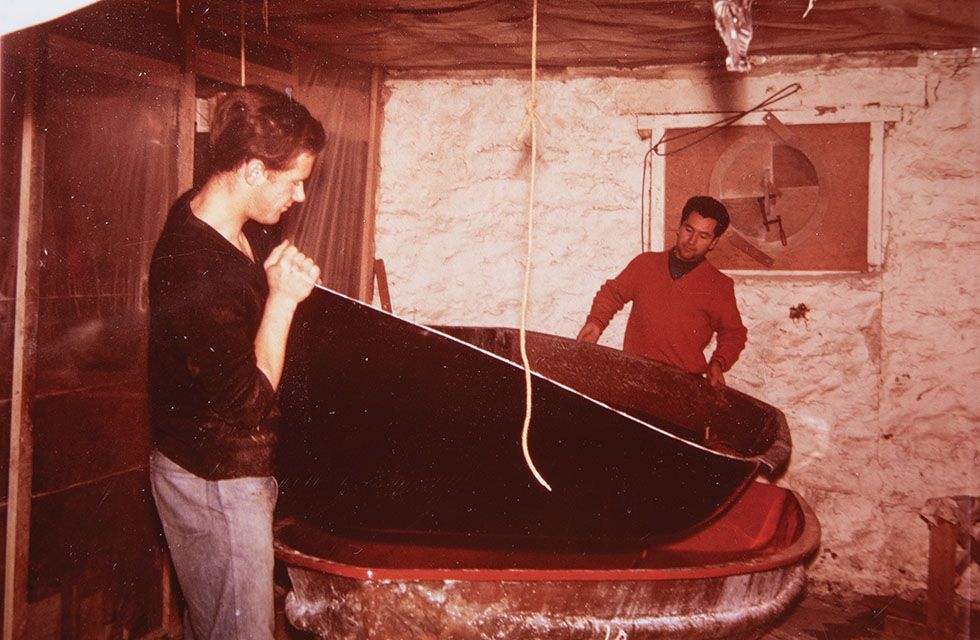
Fraser McGruer and John Kilpatrick removing the first fibreglass hull from its mould in the stables workshop.
“Cliff had ties to Meaford and Thornbury, so he decided to spend winters here and started to build boats in about 1933. He’d work at his dad’s marina in the summer, build in the winter. His customers then were folks who had summer places around Parry Sound—including families like the Eatons from Toronto and some Americans who came up—and needed power boats; runarounds. Cliff’s mainstays were steel, aluminum, and wood, and he also built for fuel companies like Esso and utility boats during the war. He never did his own line of sailboats, but he worked with other companies to finish a handful of them,” says Laporte.
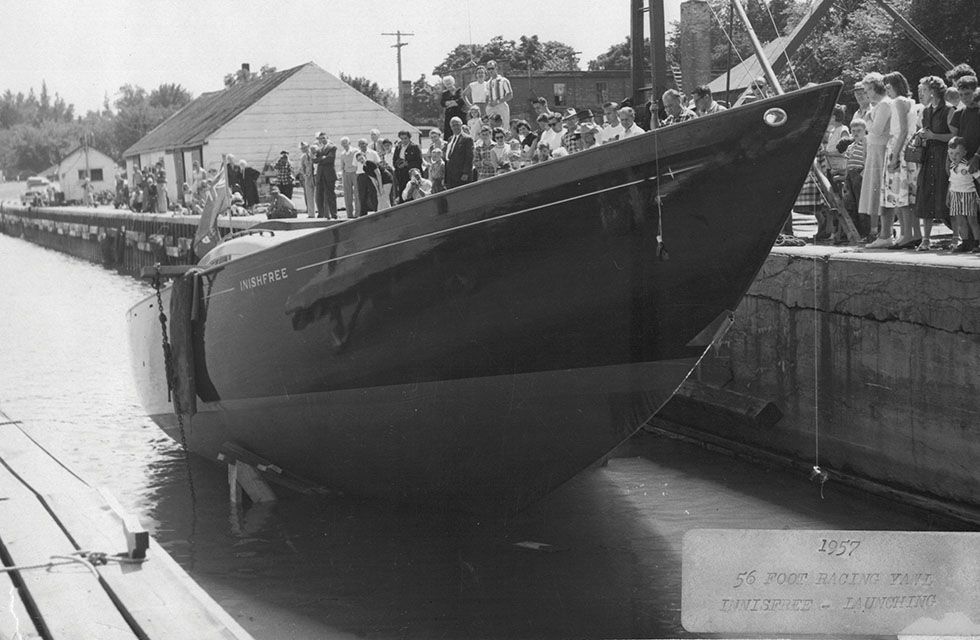
Notably, in the late 1950s Richardson was approached by George Cuthbertson (later of C&C Yachts) to finish Innishfree. Built in Meaford in 1958, the ocean racer became world-class, winning international trophies and announcing Canada as a key player in the racing sailboat business. Around 1980 the company’s focus shifted from building to focus on boat maintenance and storage. Today Cliff’s grandson, David Richardson, is the company’s president.
Just 30 kilometres west of Meaford (by land), Owen Sound was put on the boat-building map in the 1960s by designers and builders Hubert Vandestadt and Fraser McGruer. “Vandestadt & McGruer were a fine example of carving out a nice little niche in the cruising market and built really good, solid boats. There’s still plenty out there being sailed,” says Campbell.
Vandestadt (who also did a stint working with Cuthbertson) recalls the company’s beginnings like this: “I always had a mind to get into yacht building. I had naval architecture training and was working for an engineering company in Oakville that sent me up to Russel Brothers in Owen Sound to work in its engineering department. That’s when I met Fraser and his cousin Mac, who were already building boats in Owen Sound. Fraser was planning to move to California, but I said, ‘Hey, why not stay and build here.’ So, we did.”
Vandestadt and his wife, Siebea, relocated from Oakville, and Hubert and Fraser got to work in the Vandestadt basement. “The very first job we did with fibreglass, the fumes from the styrene and polyester resin drifted up the stairs where my wife was baking an apple pie. The pie stank and we had to throw it out,” Vandestadt remembers. But the men saw a profitable future in fibreglass boats, so the decision was made to convert the stables of a barn on the Vandestadt property into a workshop.
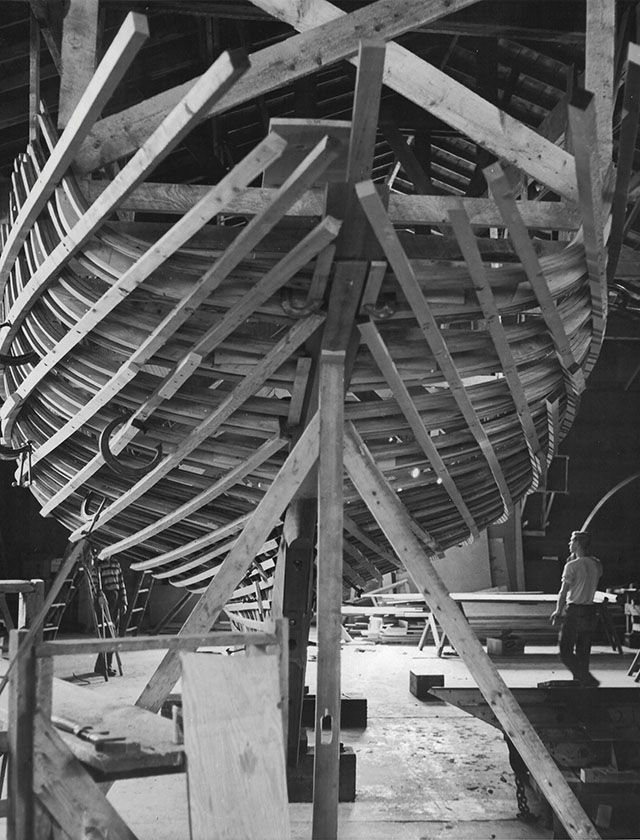
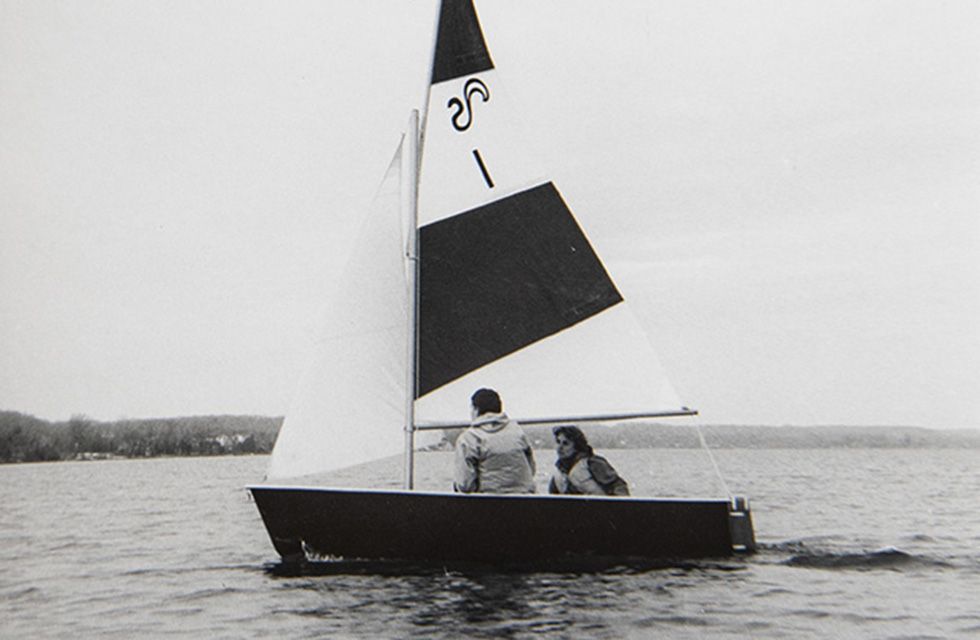
Clockwise from left: A hull frame under construction at Cliff Richardson Boats in Meaford; Hubert Vandestadt testing one of his hull designs in Owen Sound; Cliff Richardson Boats launches Innisfree in Meaford Harbour.
“There’s an irony to me that when yacht building in southern Ontario really kicked off in the mid-1960s was also when the industry largely transitioned from wood to fibreglass,” says Harris. “Major breakthroughs in fibreglass boat design came from Ontario designers and builders. Their boats won many of the crown jewels of yacht racing. Their techniques made a lasting impact on the way boats are built around the world today. Plus, these guys had the savvy to take these boats to market and make money on them.”
In 1963 V&M started building the Spindrift 13, a dinghy made of marine plywood. They built it complete and in kit form, and at the Toronto boat show that year the little sailboat sold. It was the boost the men needed to quit their day jobs and focus on building, ultimately building 800 Spindrift. Their next project and first fibreglass boat was the 11-foot Skunk (1968), and the company delivered about 1,200 of them. (Its little sister, the 9.5- foot Shrimp, would follow years later.) “The Skunk was a success because people could sail it, fish from it, put a motor on it, row it, and it was unsinkable,” says Vandestadt.
Unsinkable? The world had heard that claim before, but McGruer’s son Brodie McGruer, a boat surveyor, explains: “Up until the Sirius 28, the biggest boat [V&M] ever made, their boats had positive flotation. They injected foam between the hull, liner, and other places for buoyancy so that even if the boat was completely flooded it wouldn’t sink.”
Next V&M introduced the Siren 17 (1974). “It had a cubby cabin and could sleep four people if you knew each other really well. That year at the Toronto boat show we hadn’t tested it, but we sold 30, which was a huge number for the show and really put us on the map,” recalls Vandestadt, and V&M built about 3,200 all told. Their following release was the Sirius 21 (1976), named after the sky’s navigational star, which featured prominently on its mainsail aesthetic.
Long before V&M introduced its biggest boat, the Sirius 28 (1982; Vandestadt, just shy of his 89th birthday at the time of publication, still sails his Sirius 28 out of the Georgian Yacht Club today), the company had outgrown its stables-turnedworkshop. In 1968 they’d opened a plant in Balmy Beach, just north of Owen Sound, which they had to expand several times throughout the years to accommodate orders. At its height V&M employed more than 50 people working three shifts to fulfill demand for its yachts.
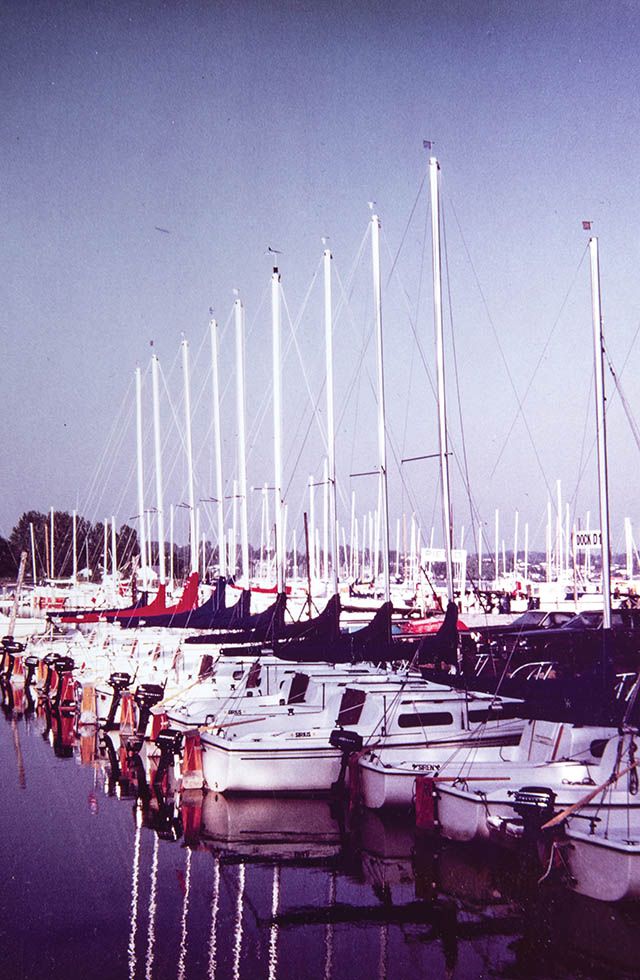
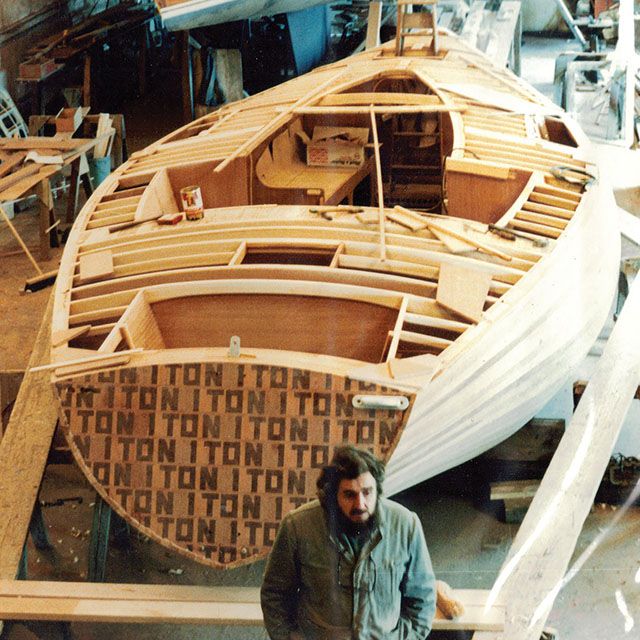
Vanderstadt and McGruer’s line of Siren 17’s and Sirius 28’s (Left). Vic Carpenter in his workshop (Right).
“At one point we had a problem selling boats only because people didn’t have a place to put them,” says Vandestadt. So, in 1981 the men shuffled their finances and started a separate company to develop and build the Owen Sound Marina and Clog & Thistle Restaurant on Owen Sound’s western shore. The marina had mooring for 130 boats (with potential for over 500 more), a full chandlery, boat rentals and sales, including the complete V&M line. The forecast looked like smooth sailing for V&M, and then the proverbial rains came.
Vandestadt and McGruer were still locked into the infamously high interest rates of the early ’80s when fire devastated the plant in 1984. The marina was sold. Vandestadt says, “By 1988 we were working without the bank, and it was the toughest time in the history of that company.” By the year’s end V&M would declare bankruptcy. Still, Vandestadt muses, “I enjoyed that stage of my life. It was the most creative time, and we worked with fantastic staff, dealers, clients, designers and builders, selling and servicing boats. I enjoyed those 23 years.”
As the 1990s began, most southern Ontario boat builders were feeling the winds of change. The recession had been crippling for builders and countless potential buyers, and many Canadian companies didn’t have the financial backing to weather the storm. Nor could they compete in pricing with California builders who had access to cheaper labour and could work 12 months a year without steep heating bills. New watercraft such as windsurfers were rising in popularity, offering people faster, easier,more affordable ways to get onto the water. Plus, sailing takes time, and the shift towards instant gratification that accompanies so much modern technology had begun to creep into homes and lives. The market for yachts was shrinking.
“From the 1960s to the 1990s the southern Ontario boat building business was huge. I don’t think the sailboat market will ever die, but it’s not going to return to what it was,” says Campbell. “That said, sailing is an adrenaline sport and a relaxing activity. For a fraction of what it costs to buy a cottage you can get out on the water and explore. The wind is free and boomers are practically giving away the incredible yachts that were made here. When you think about it, there’s never been a better time to start sailing.” E