Frozen Highways
By Cara Williams | Photography by Clay Dolan
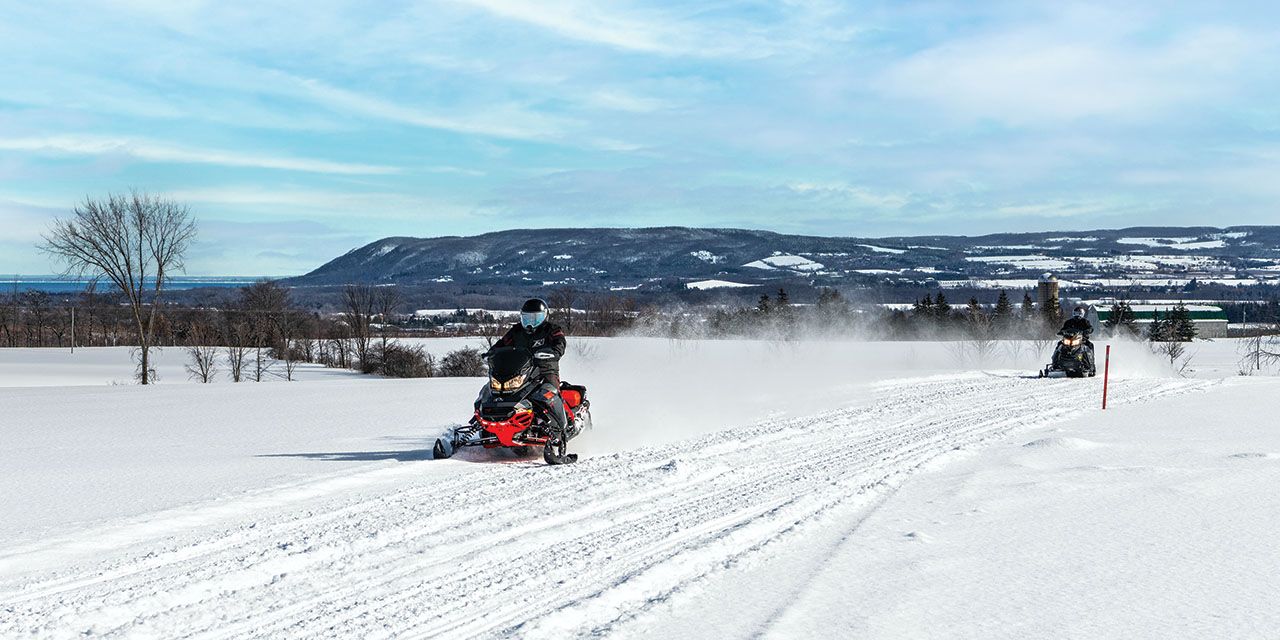
Across fields, forests , and ridgelines , snowmobile trails rely on the steady work of local clubs, volunteers, and district teams who keep winter moving.
WHEN THE FIRST SNOW DRAPES the fields and forests, a quiet transformation begins. Almost overnight, a vast winter highway appears—more than 2,300 kilometres of carefully groomed routes connecting communities across Grey, Bruce, and Simcoe counties. These trails are part of the Ontario Federation of Snowmobile Clubs (OFSC) network, over 24,000 kilometres of linked winter corridors stretching across the province. Behind every stretch lies the dedication of local volunteers, the generosity of landowners, and the support of permit buyers who together sustain one of Ontario’s most enduring winter traditions.
Long before Ontario’s trail network took shape, the sport itself began with a Canadian breakthrough. In 1937, inventor Joseph-Armand Bombardier received the patent for his first snow-going machine—a prototype built in his garage in Valcourt, Québec. Its arrival opened an entirely new way to travel through winter, and snowmobiles quickly captured the imagination of riders across the country. As the machines gained popularity, small local snowmobile clubs began forming everywhere. In North Simcoe, John Power—then a Bombardier dealer—recognized the need for a unified provincial structure. In 1967, he brought club leaders together at the Sportsman Inn in Victoria Harbour, a meeting that would lead to the creation of the OFSC.
Today, the OFSC oversees a network divided into 15 snowmobiling districts, each made up of several local clubs responsible for maintaining the trails in their region. This structure helps organize the province’s vast system and ensures that trail work, grooming, landowner relations, and rider support are managed at the local level—where volunteers know the terrain, the community, and the needs of the riders who pass through.
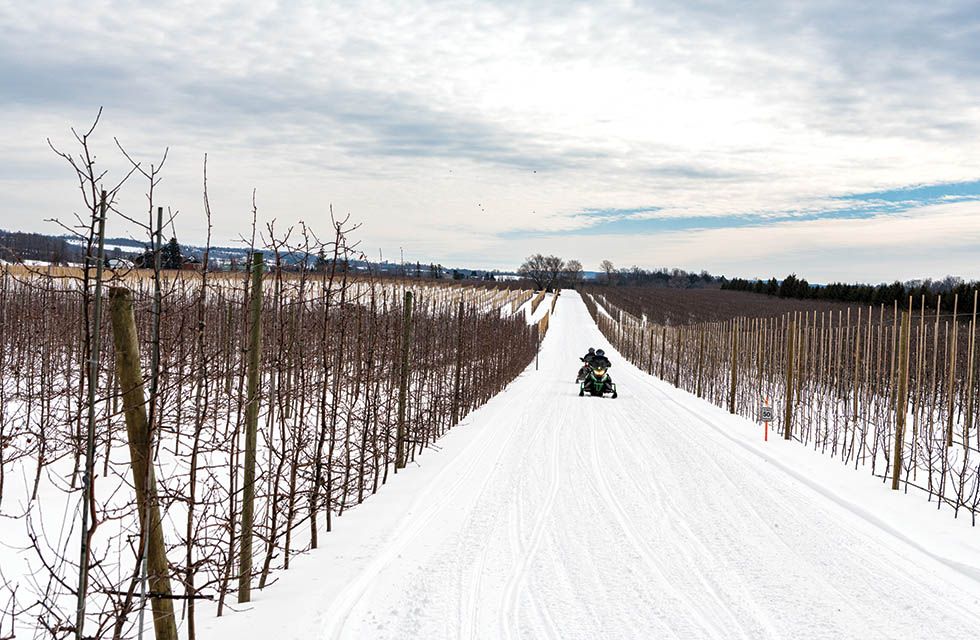
“The Georgian Bay Snowriders (GBSR) maintain approximately 200 kilometres of OFSC trail in Southern Georgian Bay,” says Patrick Murray, GBSR President. Based in Midland, the club was among the founding members of the OFSC when it formed in the late ’60s. “We continue in awe of the vision that John Power created. We’re especially lucky to have a very strong volunteer base and many businesses that rely on winter tourism. Our volunteers enjoy each other and spend a considerable amount of time together working on the preparation of our trails and planning for special events.” The club also contributes to the broader community. “GBSR gives back with help and financial support to other organizations,” he adds. “Our trails are interwoven in history and culture. On an afternoon ride, you may experience hearing our five local languages— Anishinaabenowin from Christian Island, Métis [Michif ] around Lafontaine, French in Penetanguishene, and English—but even better, the language we all share across the world: profanity,” he laughs. “Being surrounded by Georgian Bay, it’s not hard to fall in love with our area for winter recreation.”
Further west, the ridgelines and farm fields of the Escarpment mark the area maintained by the Meaford District Ridge Runners. The club oversees more than 80 kilometres of trail stretching fromWoodford and Walters Falls to Ravenna. “We have about twenty active volunteers,” says club member Andrew Scott. “We look after trail maintenance, staking every year, and we have to sign up landowners—that’s a pretty big part of it. The majority of the trails are on private property.”
Club volunteers form crucial relationships with local landowners, who generously provide annual permission to build and maintain snowmobile trails on their property. Once this permission is in place, the volunteers get to work cutting brush, building bridges, installing gates, repairing culverts, and putting up stakes and signs every fall and taking it all down in the spring—a cycle repeated every year. “We all bring our own equipment and time to the table to try and do this just for the love of it,” Andrew says. “It really hinges on the volunteer time and capacity. It’s the sense of camaraderie that keeps us going. You meet people in garages, on the trail, at the clubhouse. That’s the best part.” Club president Mike Ferguson echoes that feeling: “Friends are a big part of it for sure. The relationships you end up with from contributing all your time to this stuff—that’s the best part.”
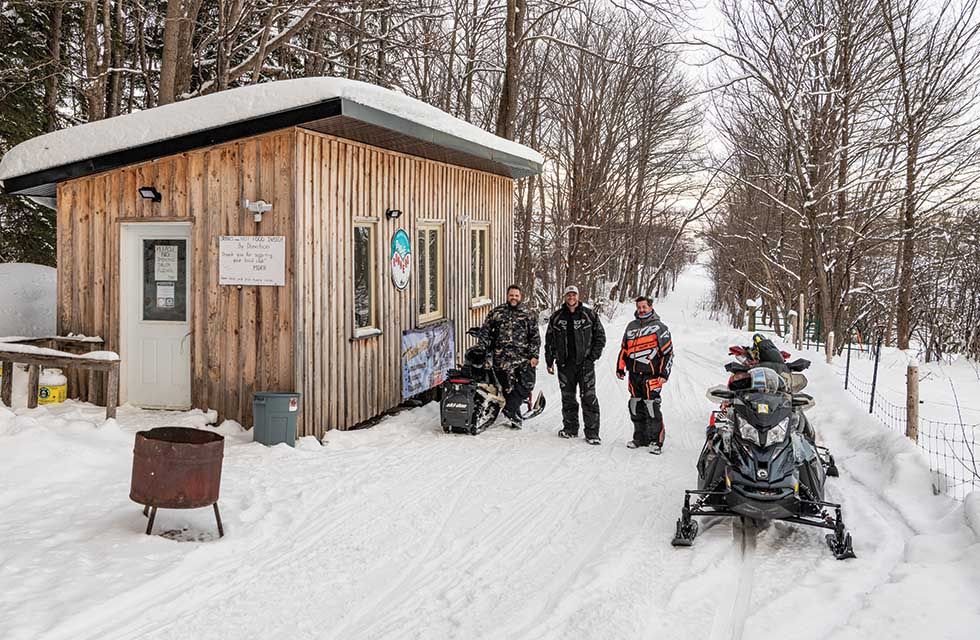
The Ridge Runners’ modest clubhouse is the heart of their winter community. “It was probably five years in the making,” Andrew says. “It’s a place to stop on the trail and warm up. We host our poker run there, and it’s also a stop for rides like the Kelly Shires Breast Cancer Snow Run. People come from all over—London, Barrie, wherever—to use the trails.”
For many, snowmobiling is a family tradition as much as a pastime. “I started snowmobiling with my dad after skiing,” Andrew says. “Now I’m out there with my own kids. It’s familybased and community-driven.” Thursday nights often turn into long rides to nearby towns for dinner—Owen Sound for pizza, Wiarton for wings—before heading home beneath a star-filled sky.
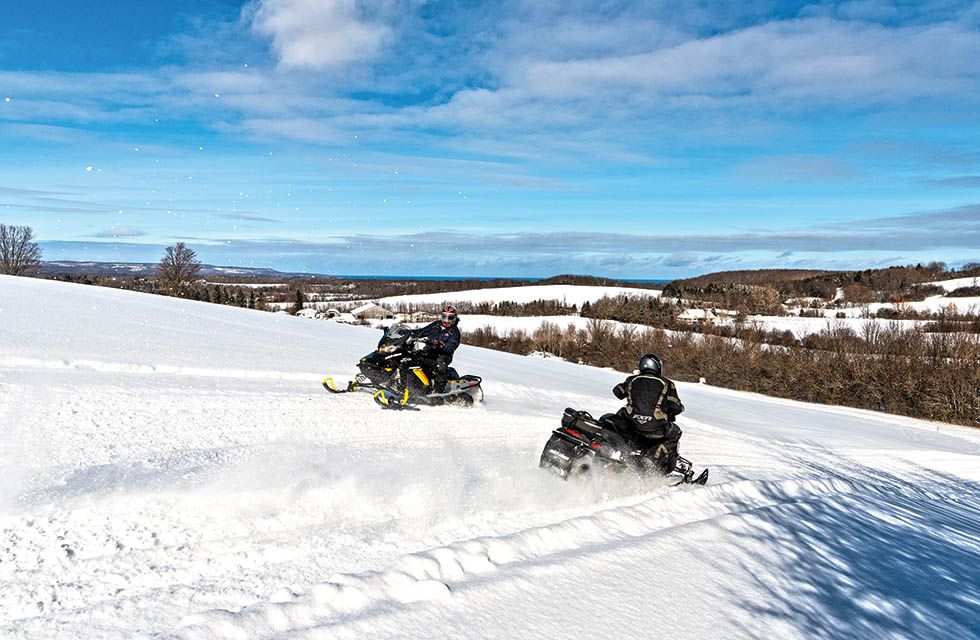
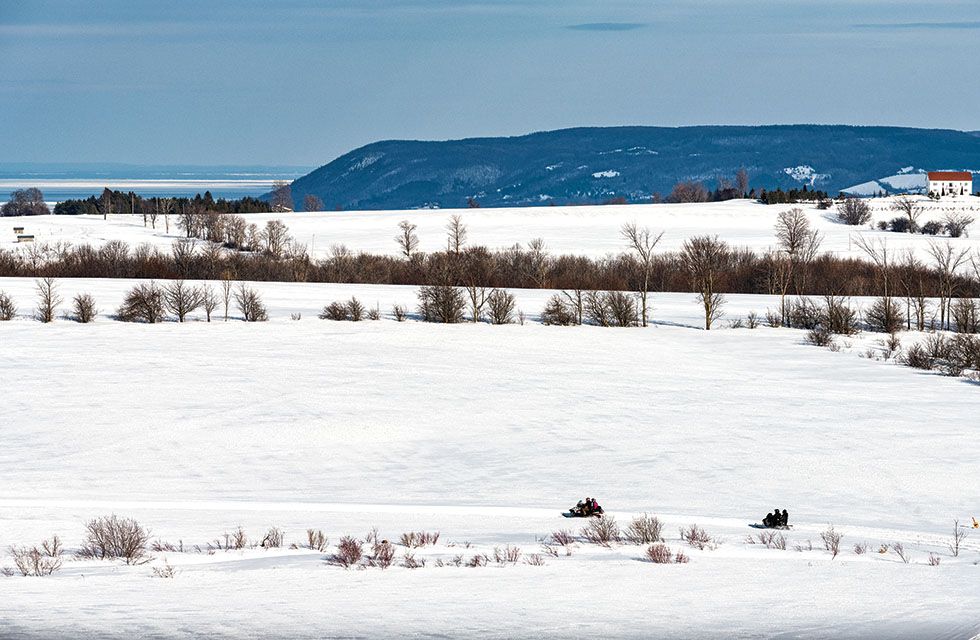
Just south of Georgian Bay, the Blue Mountain Snowdrifters care for a stretch of trail system defined by dramatic terrain and sweeping winter views. “Our area offers different terrain for riders of all abilities,” says club president Claude Sulpizi. “From smooth, beautiful trails through farmland in Clearview to the breathtaking ride through the forests of Pretty River Provincial Park, there’s something here for everyone.” The mix of open fields, hardwood forest, and Escarpment elevation creates some of the region’s most memorable riding—particularly along the B111 trail west of Glen Huron, where the route climbs sharply over Devil’s Glen.
The highlight is the lookout above the gorge. “If you are in the area, be sure to stop at the lookout point over Devil’s Glen,” Claude says. “From here, you can stand on the cliff and see a breathtaking view of Georgian Bay, and if the skies are clear and blue, you should be able to see all the way to Midland.” It’s a section of trail that showcases the best of winter on the Escarpment: high ridgelines, deep forest, and long, wide-open vistas that seem to stretch endlessly toward the bay.
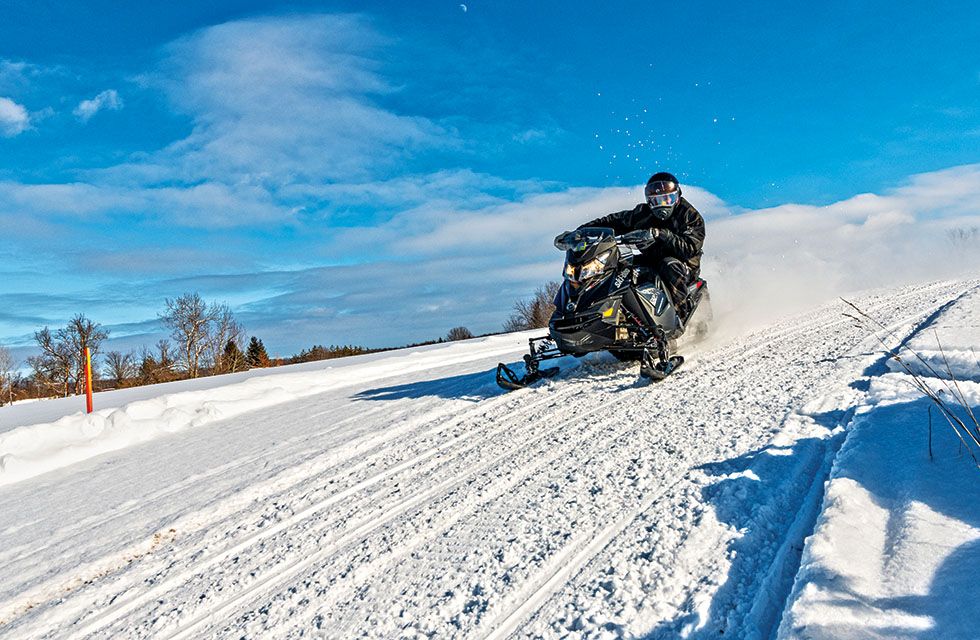
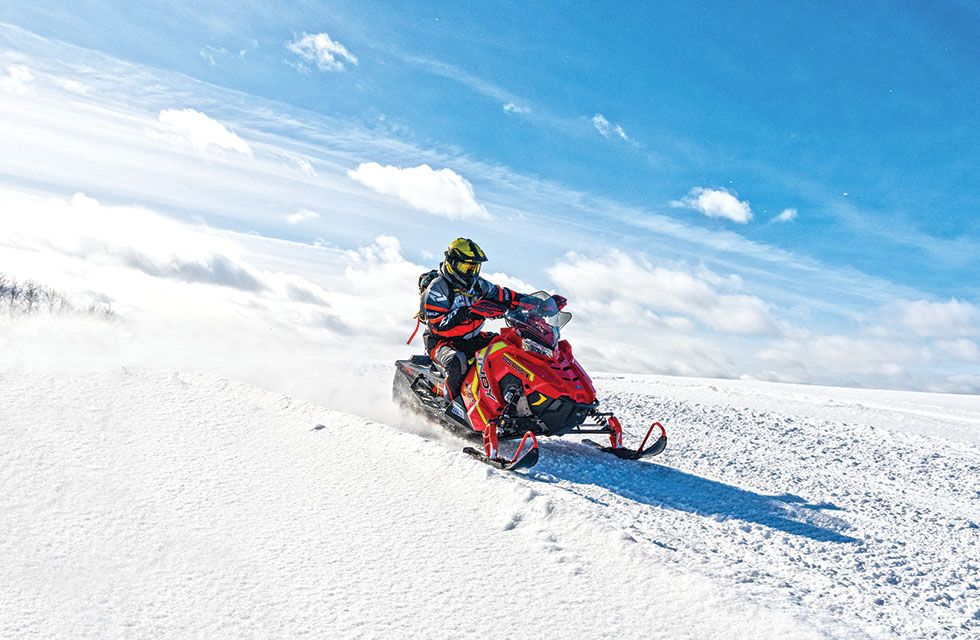
District 9—the largest in Ontario—is set between Lake Huron and Georgian Bay. From Tobermory to Fergus, then east to Thornbury, it is best known for its reliable lake-effect snow and more than 2,300 kilometres of groomed, interconnected trail. Riders can travel through a mix of Escarpment viewpoints, rolling farmland, and deep forest corridors, with snowmobile-friendly places to eat, refuel, and stay along the way. Many riders come for the day and return for longer trips once they’ve experienced the terrain first-hand.
Just like in other districts, the trail network here stands on three tightly linked supports: volunteers, landowners, and snowmobile trail permit buyers. “Our volunteers are the people in the field with passion,” says Karen Buratynski, Manager of OFSC District 9. “They do this year after year, whether we get snow or not. Our landowners generously allow trails to cross their property—without them, there would be nothing. And our permit buyers fund the system. If you remove one of those three legs, the stool doesn’t stand.”
When riders purchase a Snowmobile Trail Permit, they gain access to every available OFSC trail across Ontario. “Riders buy their permit online at ofsc.on.ca and can use it anywhere in the province,” Karen explains, noting that buying a permit does not make a person a club member. “Members are individuals who volunteer for their local club,” she says. “Permit buyers fund the network, and some choose to volunteer as well.”
RIDE SMART, RIDE SAFE
• Purchase a Snowmobile Trail Permit online at ofsc.on.ca.
• Check trail availability using the Go Snowmobiling Ontario app or the OFSC Interactive Trail Guide.
• Stay on marked trails—most routes in southern Ontario cross private property.
• Ride within posted speed limits and be prepared for changing weather or terrain.
• Wear proper gear, ride a well maintained machine, and share your planned route with someone at home.
• Keep your phone charged and ride with a buddy whenever possible.
• Zero tolerance for alcohol or cannabis while riding.
• Remember the three pillars sustaining Ontario’s trails: volunteers, landowners, and permit buyers.
Snowmobiling injects vital tourism into rural Ontario each winter. “There’s significant economic benefit to our small towns,” Karen says. “Snowmobiling can be an absolutely wonderful opportunity, but we always stress smart choices—checking trail availability, staying on the marked trails, riding within speed limits, dressing appropriately for changing conditions, riding with a buddy, and zero tolerance for alcohol or cannabis.”
What most riders never see is the full rhythm of a season— early staking and signage installation before the snow arrives, hours spent brushing trails, or the planning that happens yearround at the club and district level. Volunteers work within a complex system that balances private land access, municipal cooperation, safety requirements, and provincial regulations. “A lot of people don’t realize the amount of work that goes on behind the scenes,” Karen says.
That structure is what allows Ontario’s snowmobile network to remain well managed, consistent, and connected. Riders rely on trail readiness, smooth transitions between clubs, and accurate trail status—things that only happen through careful coordination. Karen encourages new and experienced riders alike to understand how quickly conditions can change. “You’re riding in a natural environment,” she says. “Weather shifts, visibility changes, and terrain can be different from one kilometre to the next.” Checking trail availability via the OFSC Go Snowmobiling Ontario app, dressing for the elements, and travelling with a buddy aren’t just safety steps—they’re part of respecting the system that thousands of volunteers have built.
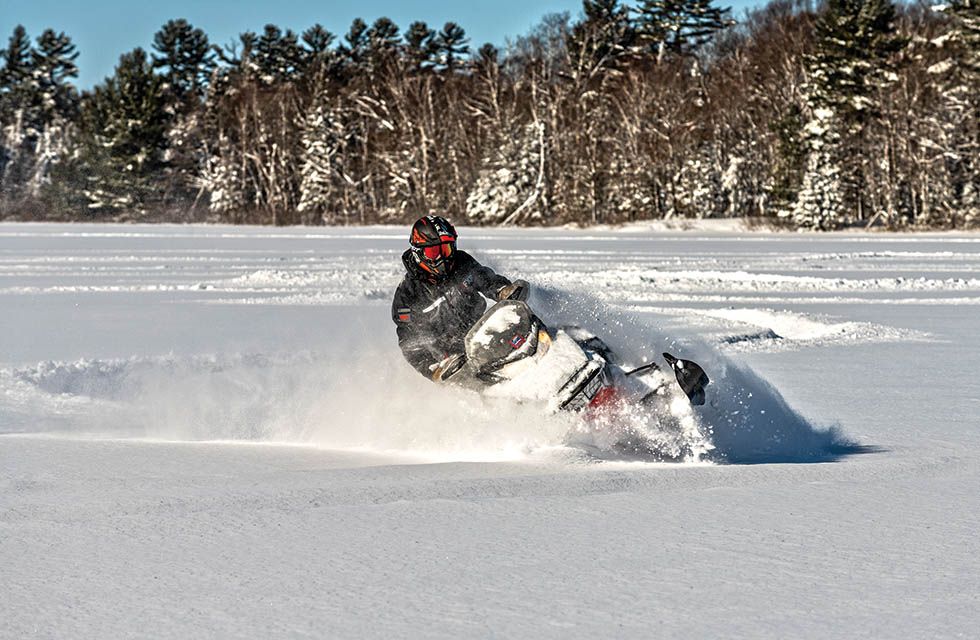
Andrew Scott on a frozen lake near Pointe au Baril.
Looking ahead, the future of Ontario snowmobiling depends on the same three pillars that hold it up today: volunteers, landowners, and permit buyers. Each season brings new challenges—warmer winters, heavier maintenance demands, and increasing pressure on rural land use—but Karen remains optimistic. “Our volunteers fuel the organization, and our permit buyers power it,” she says. “As long as those two groups continue to care about this winter tradition, we’ll keep these trails open for generations.”
From the hardwood ridges near Ravenna to the frozen flats outside Midland, Ontario’s winter landscape becomes a shared experience—quiet, expansive, and deeply communal. Andrew sums it up simply: “We’re all just trying to give back to the sport we love. You put in the hours, but you get it all back in friendship.” E